
Vincent van Gogh: Every Painting We've Explained
Artist guide · Vincent van Gogh
Vincent van Gogh: Every Painting We’ve Explained
He painted for barely ten years and was unsuccessful in his lifetime; today his pictures are among the most loved in the world. Here is who Van Gogh was, how to recognise his hand, every painting of his we have written about, and where you can stand in front of the originals, from Amsterdam to New York.
Who was Van Gogh?
Vincent Willem van Gogh was born on 30 March 1853 in Groot-Zundert, in the south of the Netherlands. At sixteen he joined the art dealers Goupil & Cie in The Hague and worked for them in London and Paris until he was dismissed. He tried teaching and preaching, and only in 1881 took up painting seriously, supported throughout by his younger brother Theo, an art dealer.
His Dutch years were dark in colour: in Nuenen, in May 1885, he painted The Potato Eaters, his first major work. In Paris, from March 1886 to February 1888, he discovered the Impressionists and Japanese prints, and his palette exploded. He moved to Arles in the south of France in February 1888, rented the Yellow House and painted at a furious pace. On 23 December 1888, after a quarrel, he cut off part or all of his left ear.
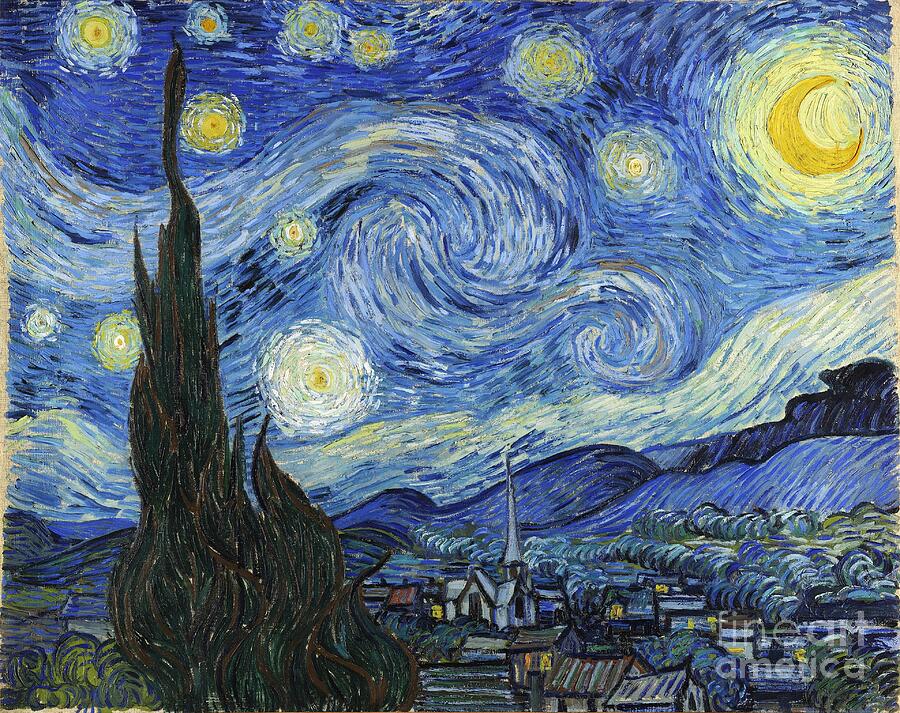
On 8 May 1889 he entered the asylum of Saint-Paul-de-Mausole at Saint-Rémy, where he painted The Starry Night. In May 1890 he moved to Auvers-sur-Oise, near Paris, under the eye of Dr Paul Gachet. On 27 July he shot himself, and he died two days later, on 29 July 1890, aged thirty-seven. In just over a decade he had made about 2,100 works, some 860 of them oil paintings, most in his last two years. Theo died six months after him; they are buried side by side at Auvers.
How to recognise a Van Gogh
- Paint you can see. Thick, directional strokes sit on the surface like ridges. In the late work the brushmarks follow the shapes, so skies, fields and even backgrounds seem to move.
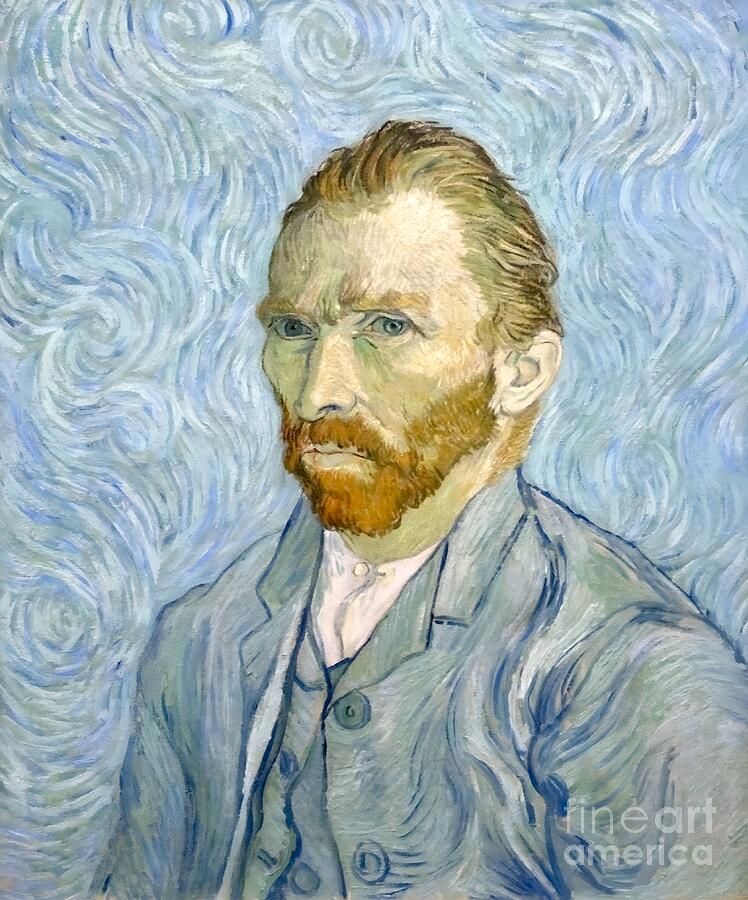
- Colour against colour. After Paris he set complementary colours side by side: orange against blue, yellow against violet, red against green, as in the orange beard and turquoise ground of the 1889 Self-Portrait.
- Swirls and flames. Cypresses that rise like fire, spirals of wind in the sky, haloes around stars and lamps: the signature of Saint-Rémy and Auvers.
- Ordinary subjects. Wheat fields, flower beds, a chair, a pair of boots, the postman: he painted what was in front of him, and made it feel urgent.
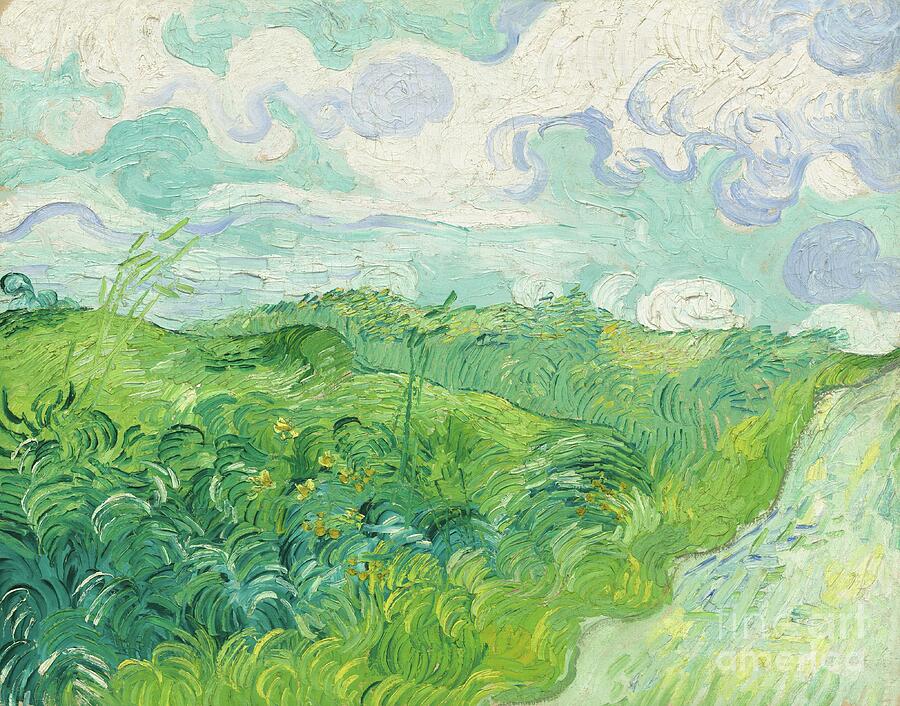
For the story of his last landscapes, read our essay on Green Wheat Fields, Auvers, painted in the last months before his death.
Every Van Gogh painting we’ve explained
All Van Gogh essays →-
 1
The Starry Night (1889)
Museum of Modern Art, New York
Painted in June 1889 at the asylum of Saint-Rémy: the view from his window, a cypress rising like a flame, a village he invented, and why he thought the picture had failed.
-
 2
Self-Portrait (1889)
Musée d’Orsay, Paris
September 1889, Saint-Rémy: orange beard, a blue suit and a background of turquoise swirls that answers the sky of The Starry Night.
-
 3
Green Wheat Fields, Auvers (1890)
National Gallery of Art, Washington
A pure landscape from his last months at Auvers-sur-Oise: green wheat, a dirt path and a moving sky, with no figures and no buildings at all.
-
 4
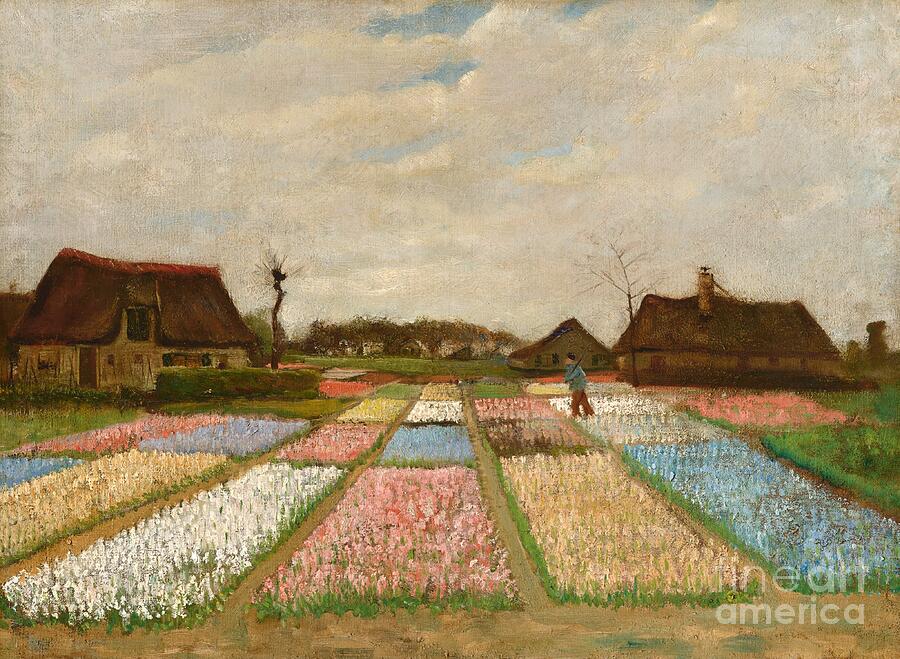
Flower Beds in Holland (c. 1883)
National Gallery of Art, Washington
Bulb fields in bloom from his years in The Hague, long before Arles: Van Gogh’s early colour, and a small dating puzzle.
-
 5
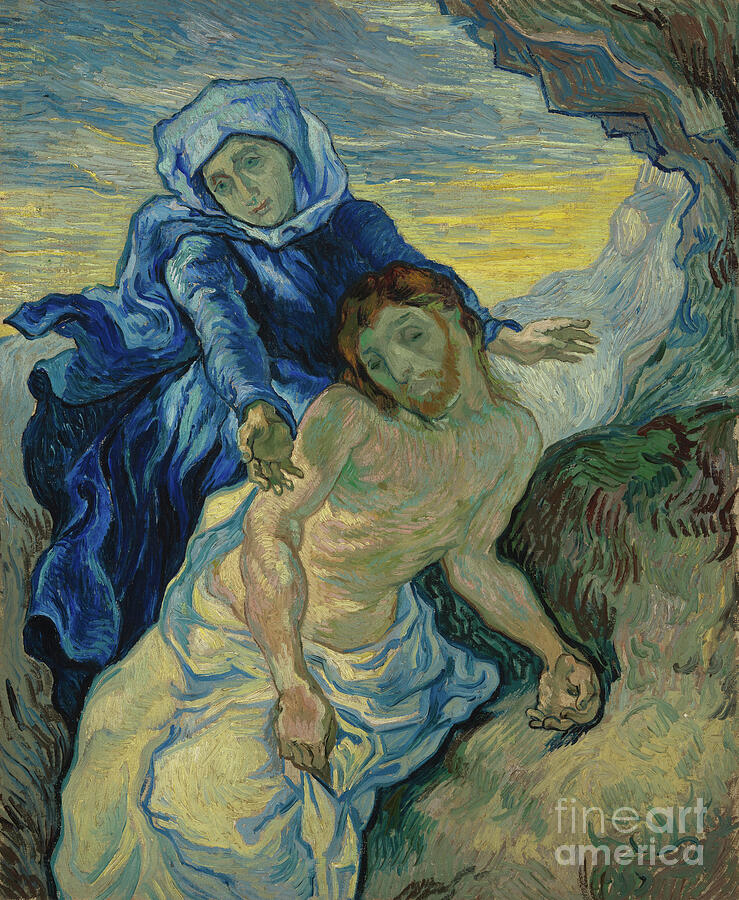
Pietà (after Delacroix) (1889)
Van Gogh Museum, Amsterdam
A spoiled lithograph, a borrowed composition and Van Gogh’s own blue and yellow: the Virgin mourning a red-haired Christ, painted at Saint-Rémy in September 1889.
More Van Gogh in our print shop
All Van Gogh prints →We have not written essays on these paintings yet, but you can already hang them on your wall.
-
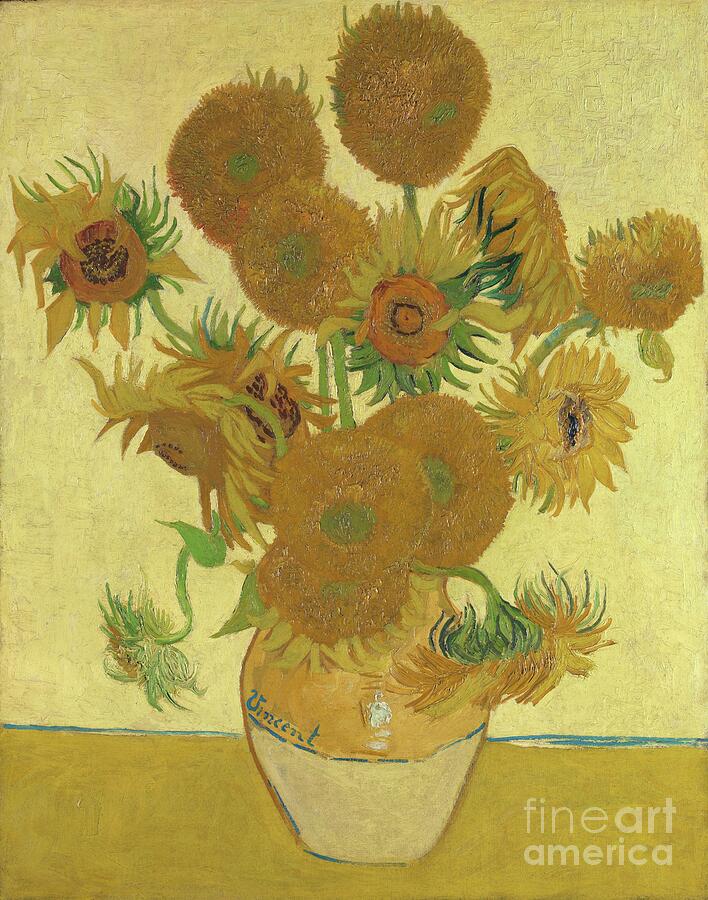
Sunflowers
Vincent van Gogh, 1888
Sunflowers in a vase, painted in Arles to decorate the Yellow House before Gauguin arrived.
-
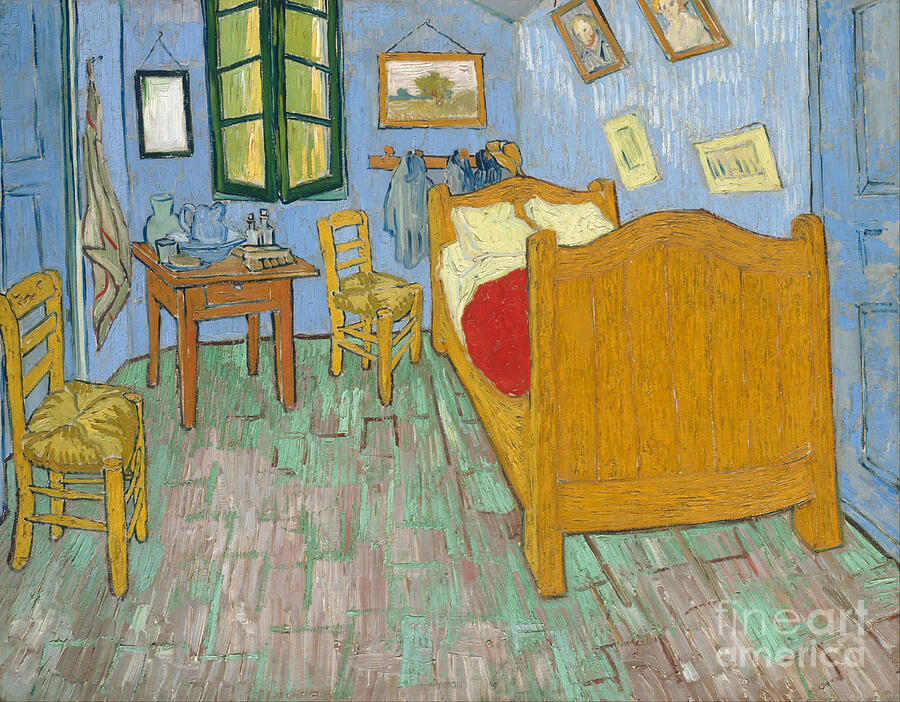
The Bedroom
Vincent van Gogh, 1889
His room in the Yellow House at Arles, painted again at Saint-Rémy a year after the first version.
-
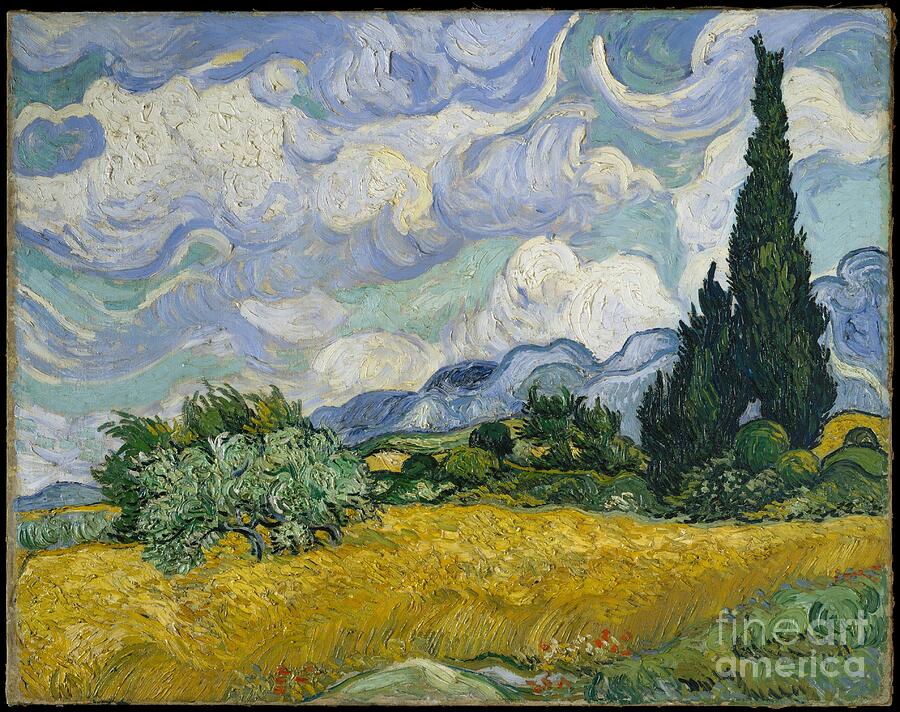
Wheat Field with Cypresses
Vincent van Gogh, 1889
Golden wheat, dark cypresses and curling clouds, painted at Saint-Rémy.
-
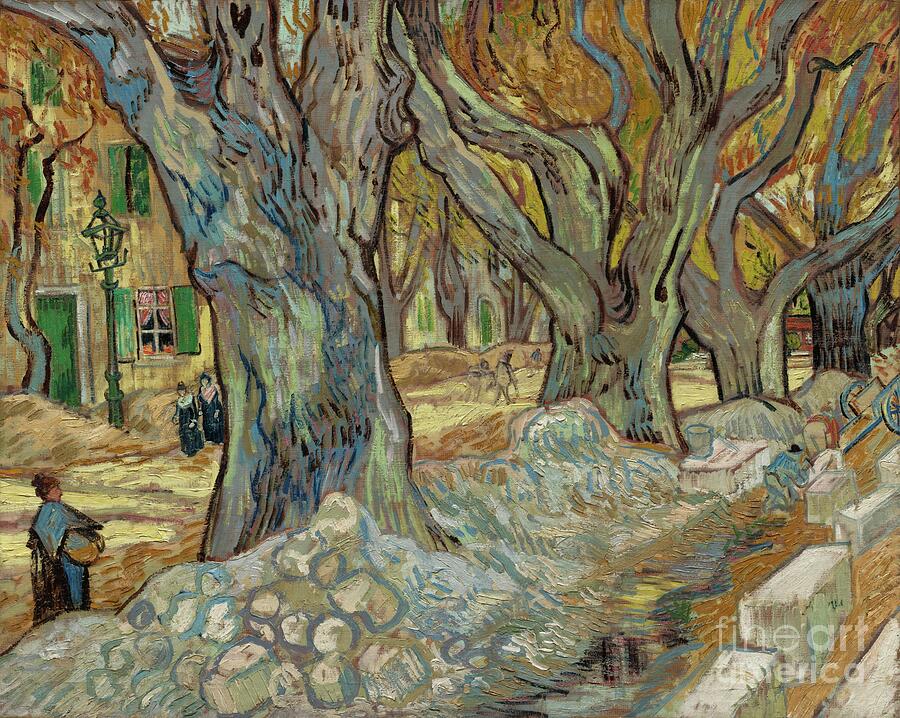
The Large Plane Trees
Vincent van Gogh, 1889
Road menders at work under huge, twisting plane trees at Saint-Rémy.
-
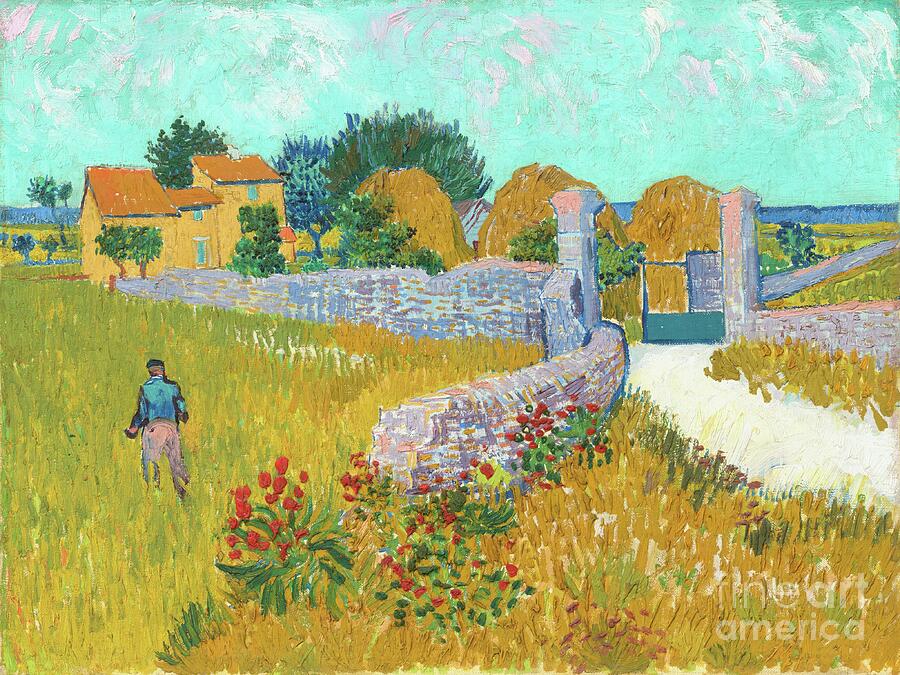
Farmhouse in Provence
Vincent van Gogh, 1888
A farmhouse behind a field of ripening wheat near Arles, under a bright blue sky.
Where to see Van Gogh
Van Gogh Museum (Amsterdam)
Museumplein, Amsterdam · the museum devoted to his life and work. Its permanent display includes The Potato Eaters, Almond Blossom and Sunflowers. Tickets are sold online on the museum’s own ticket site.
Museum of Modern Art (New York)
11 West 53 Street, New York · The Starry Night. Read our New York guide for the Met on Fifth Avenue.
Musée d’Orsay (Paris)
Esplanade Valéry Giscard d’Estaing, Paris · the 1889 Self-Portrait among the Post-Impressionists. See our Paris guide.
National Gallery of Art (Washington, D.C.)
6th Street and Constitution Avenue NW, Washington · Green Wheat Fields, Auvers and Flower Beds in Holland. Free admission. See our Washington guide.
Watch: Van Gogh on our YouTube channel
The newsletter behind the paintings
New essays and the stories behind them, straight to your inbox. Or browse every painting by artist, period, theme and museum.
Some links are affiliate links; we may earn a commission at no extra cost to you.
Sources: Wikipedia, “Vincent van Gogh”; the museum records cited in each essay; official websites of the Van Gogh Museum, MoMA, the Musée d’Orsay and the National Gallery of Art.
Comments
Post a Comment