
Leonardo da Vinci: Every Painting We've Explained
Artist guide · Leonardo da Vinci
Leonardo da Vinci: Every Painting We’ve Explained
Painter, engineer, anatomist and the author of some of the most famous pictures ever made, from a handful of surviving paintings. Here is who Leonardo was, how to recognise his hand, every painting of his we have written about, and where you can stand in front of the originals, from the Louvre to a convent refectory in Milan.
.png)
Who was Leonardo?
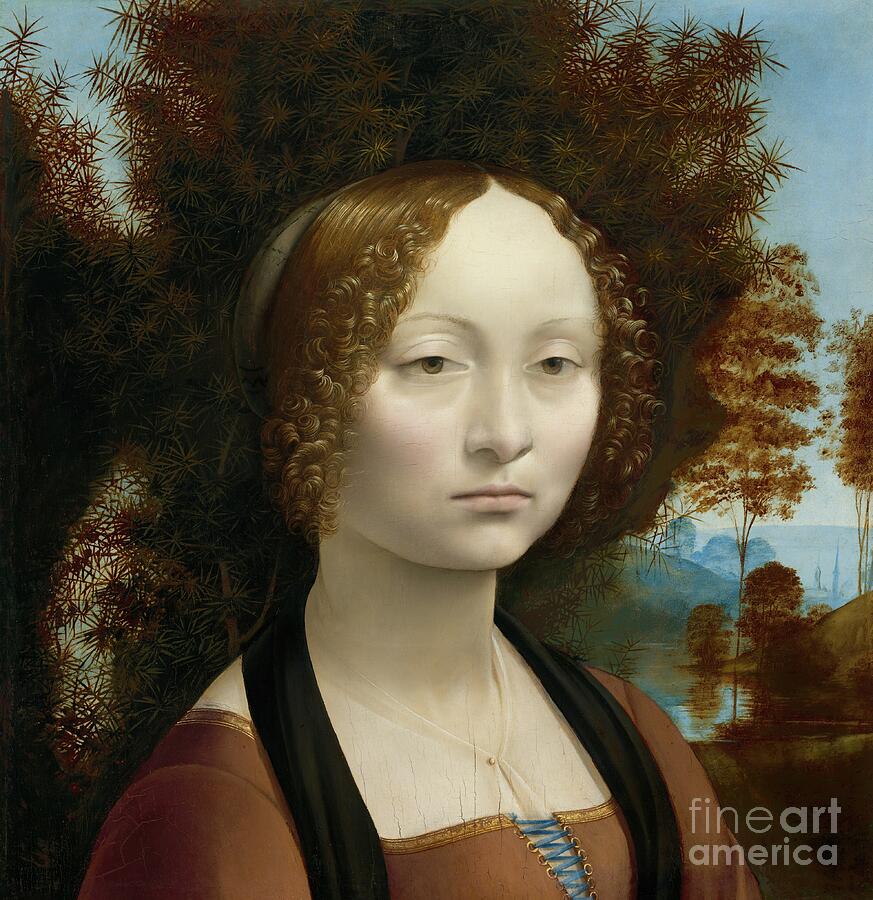
Leonardo was born on 15 April 1452 in or near Vinci, a hill town in Tuscany about 35 kilometres from Florence, the son of a Florentine notary, Ser Piero, and a young woman called Caterina. His parents never married. Around the age of fourteen he entered the Florence workshop of Andrea del Verrocchio, the leading painter and sculptor of the city, where he learned drawing, painting and sculpture alongside metalwork, mechanics and chemistry. By 1472, aged twenty, he was registered as a master in the painters’ Guild of Saint Luke. In the same decade he painted Ginevra de’ Benci, his first great portrait.
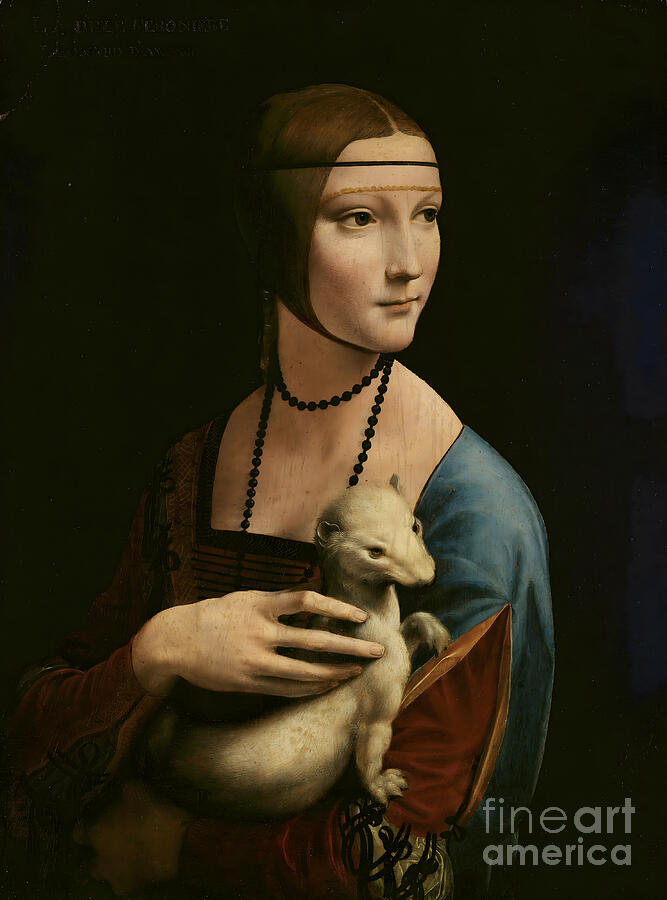
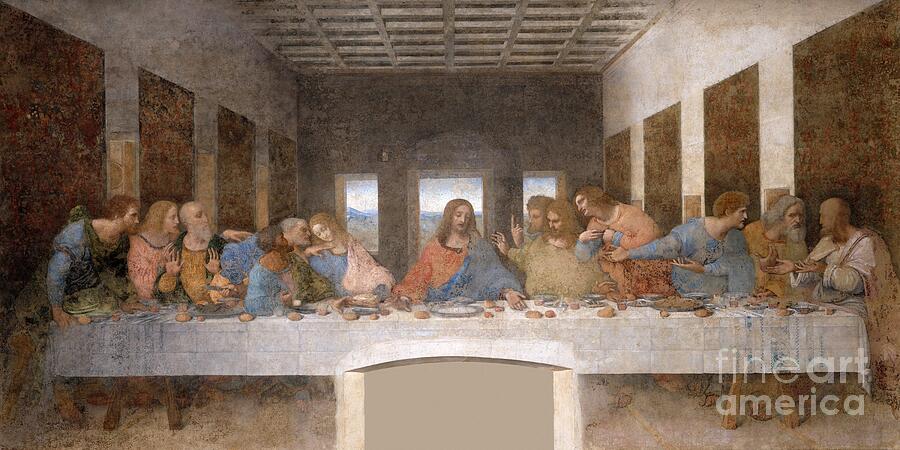
In 1482 he left Florence for Milan, offering his services to Duke Ludovico Sforza in a letter that listed what he could do as an engineer and only at the end mentioned that he could also paint. He stayed until the French drove Ludovico out in 1499–1500. Those Milanese years gave the world Lady with an Ermine and The Last Supper, as well as the model for a giant bronze horse that was never cast, because the metal went to make cannon.
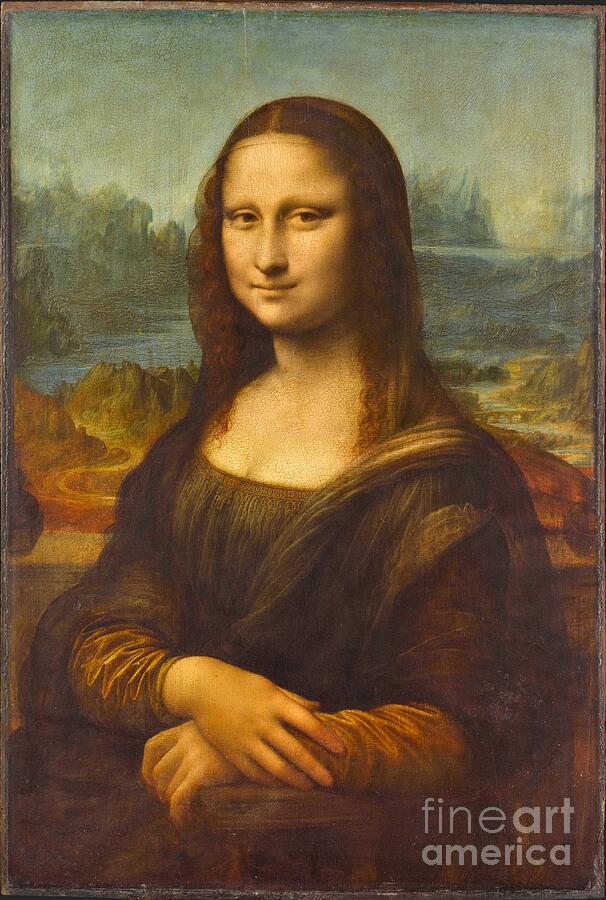
Back in Florence, by October 1503 he had begun the portrait of Lisa del Giocondo, the Mona Lisa, which he kept and reworked for the rest of his life. He returned to Milan, now ruled by the French, from 1506, spent the years 1513 to 1516 in Rome under the protection of the pope’s brother Giuliano de’ Medici, and in 1516 accepted the invitation of King Francis I of France. He lived his last years at Clos Lucé, a manor house near the royal château of Amboise, and died there on 2 May 1519, aged sixty-seven.
He left fewer than twenty-five major works, many of them unfinished, and some thirteen thousand pages of notes and drawings, written in mirror-image script, on anatomy, flight, water, geology and painting itself. Very few of his inventions were ever built, but his pictures changed European painting for good.
How to recognise a Leonardo
- Smoke instead of lines. Leonardo dissolved outlines in soft shadow, a technique later called sfumato, “Leonardo’s smoke”. The corners of the mouth and eyes melt into shade, which is why the Mona Lisa’s smile never quite settles.
- Bodies that turn. His sitters twist: the head goes one way and the shoulders another, as in Lady with an Ermine, at a time when most portraits were still in strict profile.
- Blue, dreamlike landscapes. Behind his figures rise jagged blue mountains, winding rivers and haze, a world that seems to be still taking shape.
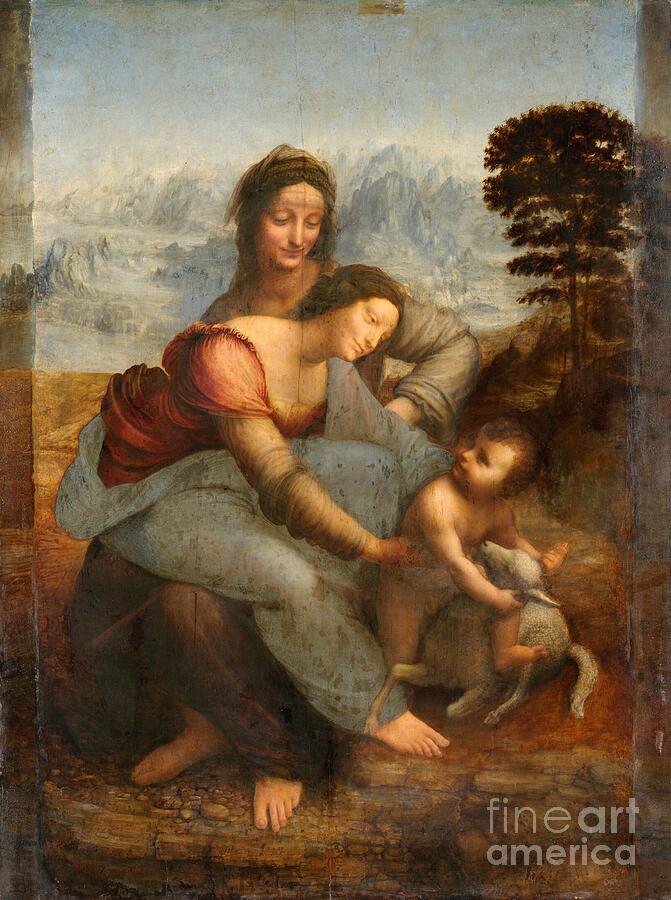
- Figures packed into a pyramid. Groups are built as a single, compact shape, often set at an angle, as in the Saint Anne, where three generations interlock.
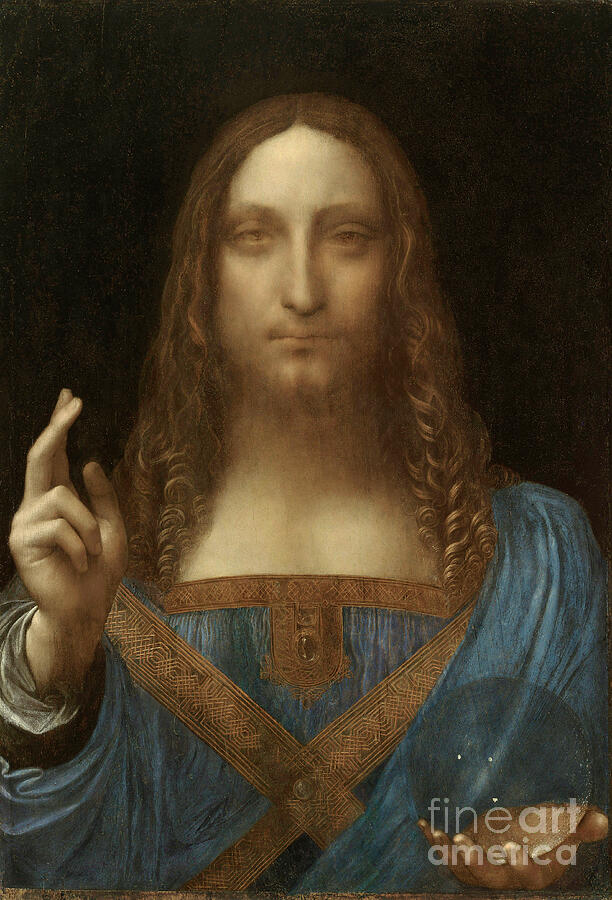
His compositions were copied again and again: the Saint Anne alone influenced Michelangelo, Raphael and Andrea del Sarto. Compare it with Raphael’s School of Athens, or read our essay on the most disputed painting attributed to Leonardo, Salvator Mundi.
Every Leonardo painting we’ve explained
All Leonardo essays →-
 1
1Ginevra de’ Benci (c. 1474–1478)
National Gallery of Art, Washington
Painted by a Leonardo in his early twenties, it crossed the Atlantic in 1967 in a suitcase booked into a first-class seat. The only painting by Leonardo on public view in the Americas, with a hidden motto on the back.
-
 2
2Lady with an Ermine (c. 1489–1491)
Czartoryski Museum, Kraków
Cecilia Gallerani turns with a white ermine in her arms, its fur painted hair by hair. During the Second World War the Nazi governor of occupied Poland hung it in his own office.
-
 3
3The Last Supper (c. 1495–1498)
Santa Maria delle Grazie, Milan
Jesus has just said that one of the twelve will betray him, and the table erupts. Painted in tempera on the wall of a monastery dining hall, it began to decay within Leonardo’s lifetime.
-
 4
4Salvator Mundi (c. 1500)
Not on public view since 2017
Christ blesses with one hand and holds a crystal orb with the other. Sold for US$450.3 million in 2017, the most expensive painting ever auctioned, and still argued over by scholars.
-
 5
5Mona Lisa (c. 1503–1519)
Musée du Louvre, Paris
Begun in Florence around 1503 and never handed over to the man who ordered it. Leonardo kept working on the smile, and the landscape behind it, for years.
-
 6
6The Virgin and Child with Saint Anne (c. 1501–1519)
Musée du Louvre, Paris
Mary, sitting on her mother’s lap, reaches down for the Christ Child as he grabs a lamb by the ears. Three generations folded into one daring pyramid, still unfinished when Leonardo died.
-
 7
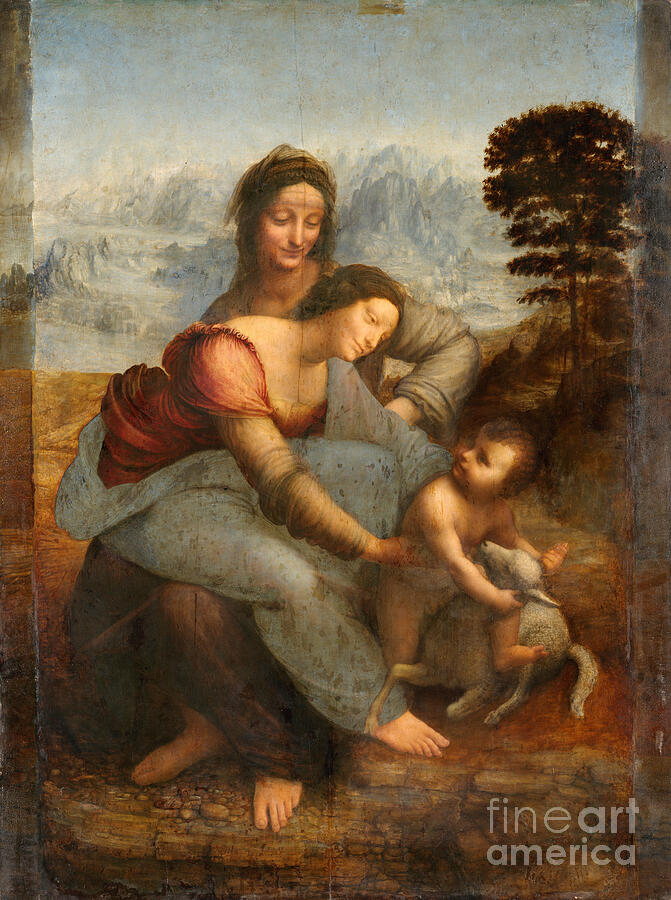
7The Vulture That Wasn’t There: Freud and Saint Anne
Musée du Louvre, Paris
In 1910 Freud claimed to see a vulture hidden in the Virgin’s blue robe. The bird in Leonardo’s childhood memory was a kite, lost in a German translation.
Where to see Leonardo
Musée du Louvre (Paris)
Pyramid entrance, Cour Napoléon, 75001 Paris · Mona Lisa and The Virgin and Child with Saint Anne, with the Virgin of the Rocks, Saint John the Baptist and La Belle Ferronnière. Read our Paris museum guide.
National Gallery of Art (Washington, D.C.)
Constitution Avenue NW, Washington, D.C. · Ginevra de’ Benci, the only painting by Leonardo on view in the Americas. Free admission.
Santa Maria delle Grazie (Milan)
Piazza di Santa Maria delle Grazie, Milan · The Last Supper, on the wall of the former refectory. Visits are timed and must be booked well ahead.
Czartoryski Museum (Kraków)
ul. Św. Jana 19, Kraków · Lady with an Ermine, part of the National Museum in Kraków.
Salvator Mundi belongs to the Abu Dhabi Department of Culture and Tourism and has not been shown in public since its sale in 2017.
Watch: Leonardo on our YouTube channel
The newsletter behind the paintings
New essays and the stories behind them, straight to your inbox. Or browse every painting by artist, period, theme and museum.
Some links are affiliate links; we may earn a commission at no extra cost to you.
Sources: Wikipedia, “Leonardo da Vinci”; the museum records cited in each essay; official websites of the Louvre, the National Gallery of Art, the Cenacolo Vinciano and the National Museum in Kraków.
Comments
Post a Comment