The Last Supper by Leonardo: An Immortal Artistic Treasure (1498)
Jesus has just said that one of them will betray him, and the long table explodes into human weather. Hands fly, mouths open, clusters of three apostles react in shock while Judas clutches a purse in the shadow. Leonardo da Vinci's The Last Supper (1495-1498) on the refectory wall of Santa Maria delle Grazie in Milan turns a meal into a psychological diagram.
Artist: Leonardo da Vinci (1452-1519)
Date: 1495-1498
Medium: Tempera and oil on plaster (experimental mural technique)
Collection: Santa Maria delle Grazie, Milan
Notable fact: Apostles grouped in threes reacting to the betrayal announcement; fragile wall technique caused early deterioration
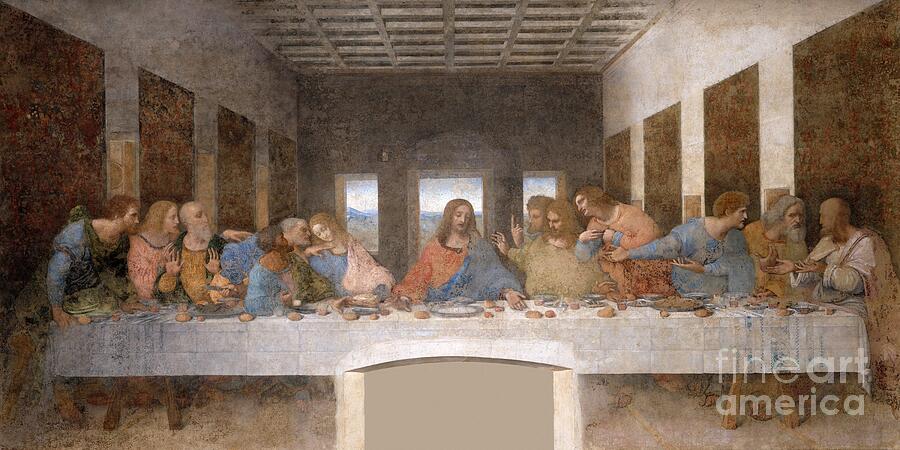
Groups of Three
Instead of a stiff row, Leonardo knots the apostles into foursomes of three, each knot a different flavor of disbelief, anger, or grief. Thomas points; Philip presses his chest; John sinks toward Peter. The math of the composition keeps chaos readable. Perspective lines converge on Christ's calm head - architecture enforcing theology.
Experiment and Fragility
Working on a dry wall with experimental binders rather than true buon fresco, Leonardo gained time for subtle faces and lost durability. Flaking began early; restorations piled up; bombs and humidity threatened what remained. The miracle is that the emotional architecture still reads through the damage.
Judas in the Light
Betrayal is not a cartoon villain in a separate corner. Judas sits among the twelve, leaning back from the bread, face in shadow, money bag in hand. Leonardo makes evil look intimate - close enough to share a plate.
Why the Table Still Shakes
Everyone recognizes the instant after bad news. Leonardo paints community under fracture: one sentence, twelve reactions, and a center that holds only by geometry and grace.
Own This Painting
Hang Leonardo's Last Supper - the long table, the shock, and the calm at the vanishing point.
Watch the video essay on @SapiensVerbum on YouTube.


Comments
Post a Comment