The Fallen Angel by Cabanel: Beauty, Tears, and Rebellion (1847)
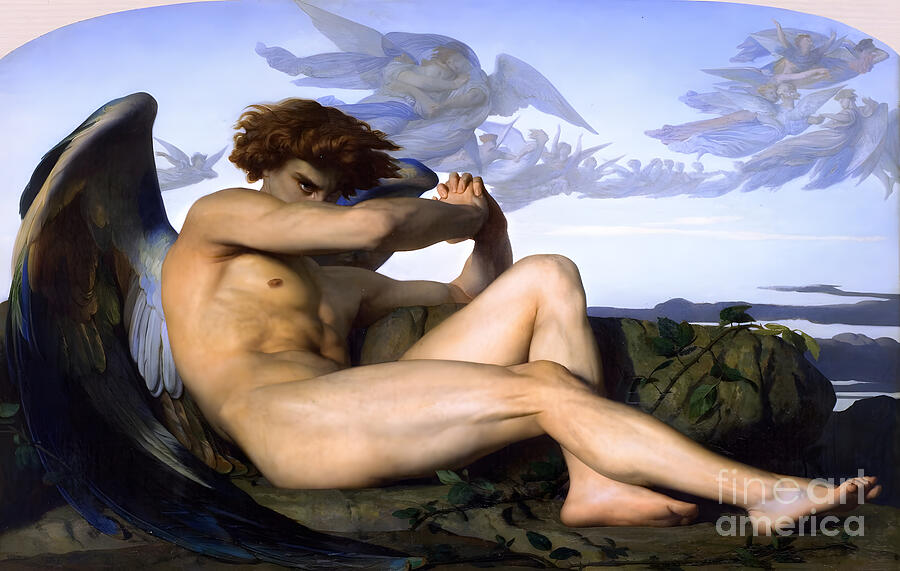
He sits on bare ground, wings folded, face half-hidden behind a flexed arm - yet one eye leaks a bright tear of fury. Hair blows wild; every muscle looks ready to spring. In Alexandre Cabanel's The Fallen Angel (1847), paradise is already lost, and what remains is gorgeous resentment.
Artist: Alexandre Cabanel (1823-1889)
Date: 1847
Medium: Oil on canvas
Collection: Musee Fabre, Montpellier
Notable fact: Shown at the Paris Salon of 1847; early judges complained of romantic excess before the work won lasting fame
Beauty After Expulsion
Cabanel paints a nude winged youth whose body still remembers heaven while his posture admits exile. Translucent skin, careful hair, and academic contour make the figure almost too perfect for ruin. That clash is the point: celestial finish wrapped around earthly shame and anger.
Tears That Are Not Soft
The red-rimmed eye and the shielding arm refuse simple pity. This is rebellion's aftermath - free will colliding with divine order - frozen at the edge of the fall. Viewers still argue whether the mood is sorrow, vengeance, or both. The painting keeps the question open by making the face incomplete and the body fully armed.
Salon Shock, Academic Rise
At the Paris Salon of 1847, some judges objected to awkward movement, draftsmanship, and a style they found too romantic. The canvas nonetheless helped launch Cabanel among the leading academic painters of his generation. Technique that looks smooth now was once a fight about how much feeling an academic nude was allowed to show.
Why the Angel Still Stares
The Fallen Angel endures because it dresses theological defeat in irresistible flesh. Look once for the tear. Look again for the will that will not apologize.
Own This Painting
Hang Cabanel's Fallen Angel - the tears of rage, the folded wings, and beauty after the fall.
Watch the video essay on @SapiensVerbum on YouTube.


Comments
Post a Comment