The Triumph of Bacchus by Velazquez: Myth Meets the Tavern (c. 1628)
On the left, a pale, half-dressed Bacchus crowns a kneeling man with vine leaves. On the right, rough Spanish faces grin out at you with cups raised, as if the god had wandered into a Madrid tavern and decided to stay. In Diego Velazquez's The Triumph of Bacchus - better known as Los Borrachos (c. 1628-1629) - classical myth and street life share one canvas and refuse to apologize.
Artist: Diego Velazquez (1599-1660)
Date: c. 1628-1629
Medium: Oil on canvas
Collection: Museo del Prado, Madrid
Notable fact: Commissioned by Philip IV for 100 ducats; painted just before Velazquez's first trip to Italy
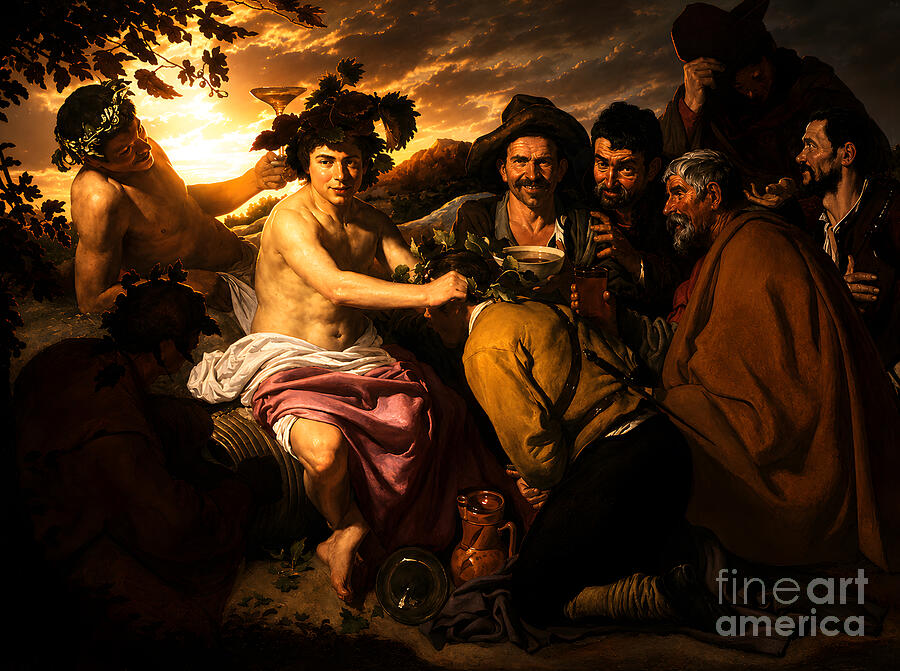
Two Halves, Two Worlds
The painting splits cleanly. Bacchus and the figure behind him wear loose classical drapery and sit in brighter light; their skin reads cooler and more ideal. The drinkers on the right wear contemporary poor men's clothes, with darker flesh and harder features closer to Jose de Ribera's naturalism. One younger man kneels before the god with sword and tall boots - better dressed than his companions, still very much of this world. The title "Triumph" is almost ironic: there is no leopard chariot, no parade of satyrs like Titian's grand Bacchic processions then in the Spanish royal collection.
Wine as Temporary Release
Velazquez presents Bacchus as the power that gifts wine and, for a while, lifts men out of their troubles. The drinkers invite you into the party; their worn faces and direct stares break the museum glass. Ideal mythology softens into something you could meet after work. Caravaggio's habit of mixing sacred costume with everyday bodies is in the DNA here, remade for a Spanish court painter who already knew how ordinary people look when they laugh.
Before Italy, After Realism
Finished just before Velazquez traveled to Italy, and paid for by Philip IV, the canvas has been called the peak of his 1620s work. It announces a program he would keep chasing: treat myth as visible life, not as polished allegory alone. Look once for the god. Look again for the men who make the triumph feel human.
Own This Painting
Hang Velazquez's Bacchus among the drinkers - myth on the left, the tavern on the right.
Watch the video essay on @SapiensVerbum on YouTube.


Comments
Post a Comment