The Rokeby Venus by Velazquez: The Secret in the Mirror (c. 1650)
She turns her back to you, and the mirror should explain her face - except the reflection does not quite obey. Diego Velazquez's The Rokeby Venus (c. 1647-1651) is a rare Spanish nude from a century that policed flesh carefully. Cupid holds the glass; Venus reclines on black silk; and the gaze becomes a puzzle about seeing, desire, and what painting is allowed to show.
Artist: Diego Velazquez (1599-1660)
Date: c. 1647-1651
Medium: Oil on canvas
Collection: National Gallery, London
Notable fact: Also called The Toilet of Venus; damaged by a suffragette attack in 1914 and later restored; long at Rokeby Hall, hence the English nickname
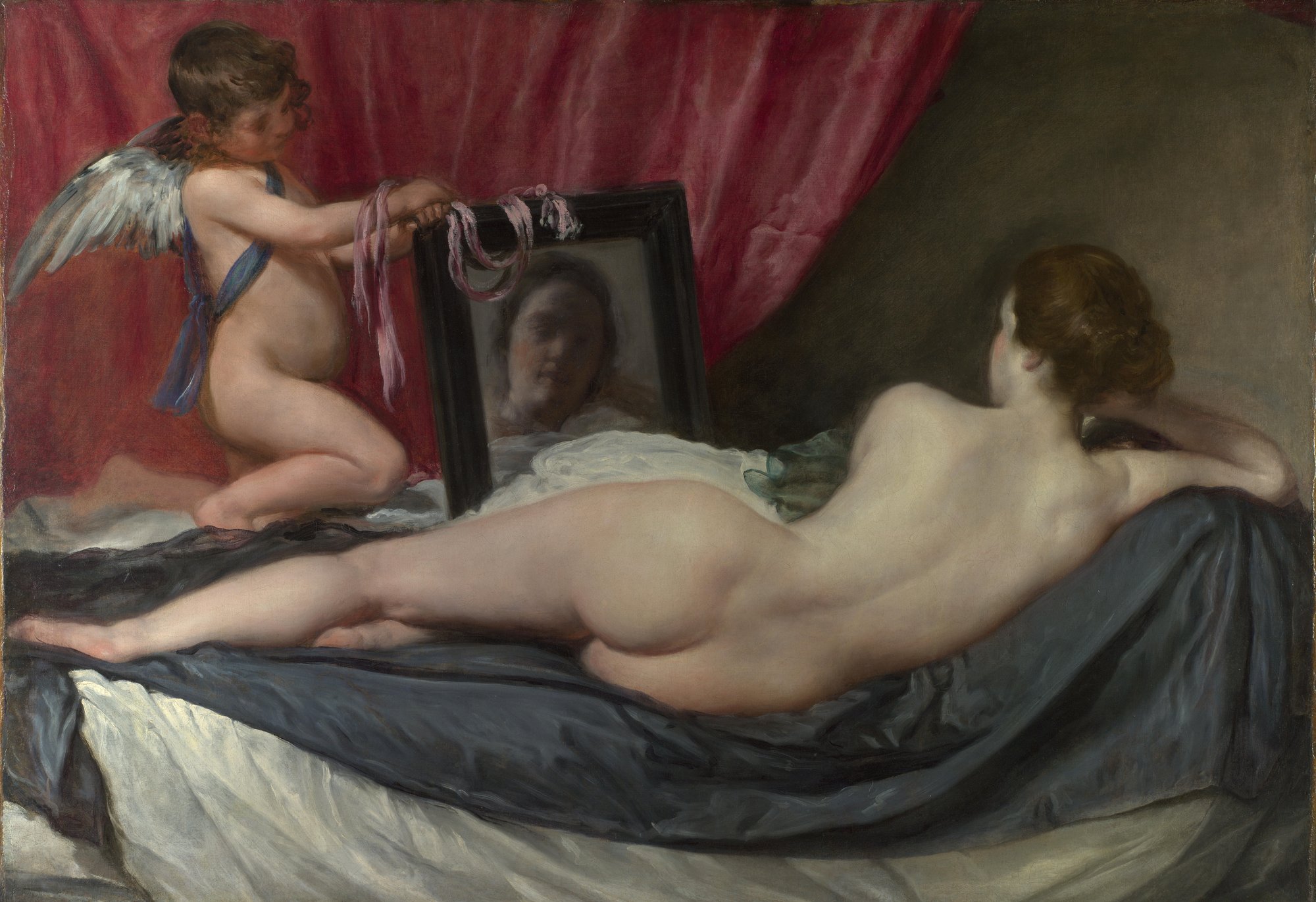
A Nude Against the Odds
In Golden Age Spain, mythological cover stories made nudes safer. Venus and Cupid supply the alibi. Velazquez still paints with worldly precision: the weight of the body, the cool of the sheet, the quiet of a room that feels private rather than Olympian. The myth is costume; the looking is modern.
The Mirror That Lies a Little
Optics refuse to line up perfectly. The face in the glass is smaller, softer, and angled in a way that prioritizes poetry over strict reflection. Some read vanity; others read the painter announcing that pictures invent the truth they claim to show. Cupid's ribbon and the dark ribbon across Venus's back keep the design taut while the argument runs through the glass.
From Rokeby to London
Named for Rokeby Hall in Yorkshire, the canvas later entered the National Gallery. In 1914 it was slashed in a political protest and repaired - a reminder that images of women's bodies remain public battlegrounds long after the oil has dried.
Why the Back Still Holds You
Most Venuses face the viewer. This one withholds, then half-returns through a flawed mirror. The seduction is delay: you are caught wanting a face the painting will only approximate.
Watch the video essay on @SapiensVerbum on YouTube.


Comments
Post a Comment