
Carl Bloch: Every Painting We've Explained
Artist guide · Carl Bloch
Carl Bloch: Every Painting We’ve Explained
The Danish painter whose Christ became, for millions of people, simply what Christ looks like. Here is who Carl Bloch was, how to recognise his hand, every painting of his we have written about, and where you can stand in front of the originals, from a royal castle north of Copenhagen to a village church in southern Sweden.
Who was Carl Bloch?
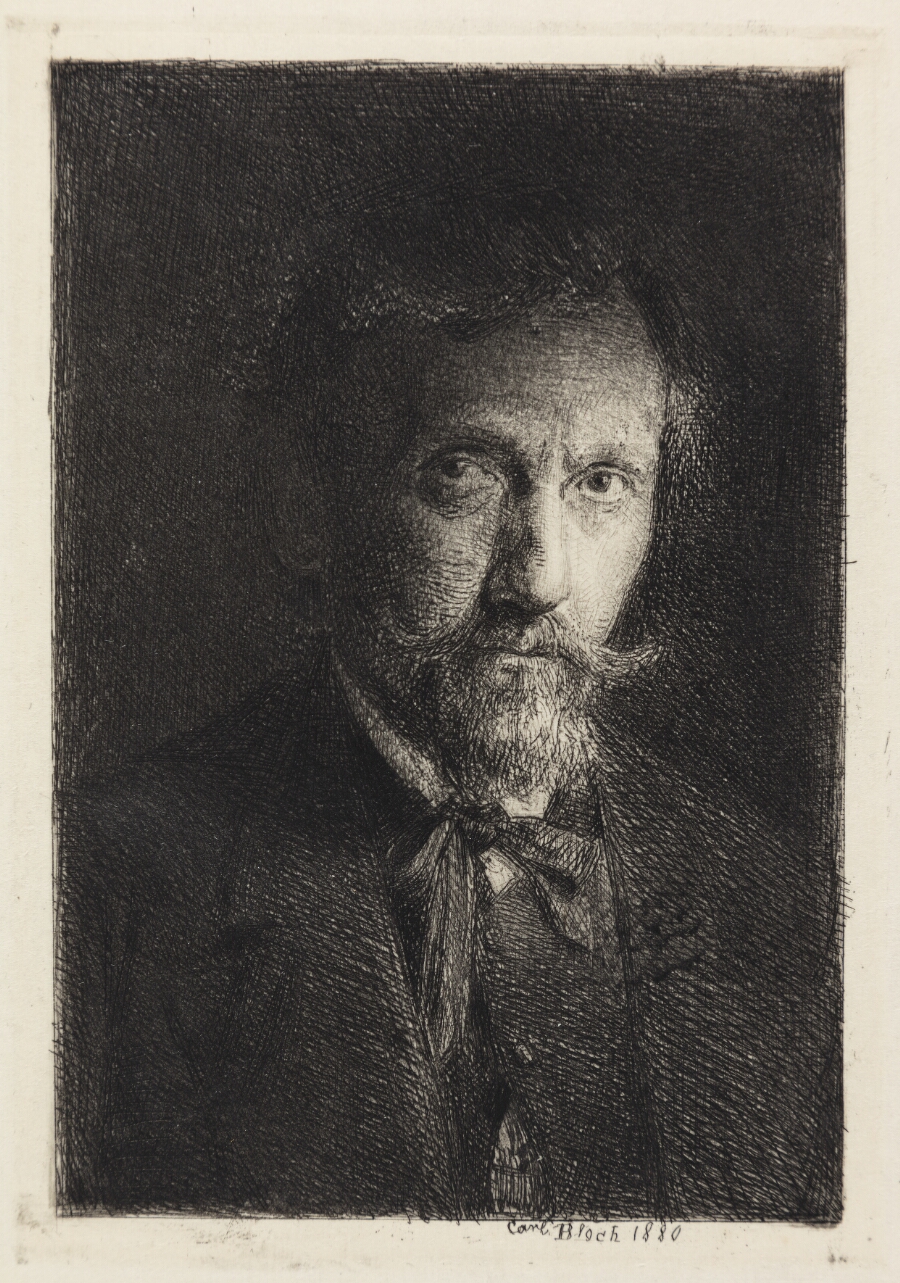
Carl Heinrich Bloch was born in Copenhagen on 23 May 1834 and died on 22 February 1890. His parents hoped he would become a naval officer; he wanted only to draw. He trained at the Royal Danish Academy of Fine Arts under Wilhelm Marstrand, and his first pictures were scenes of ordinary country life.
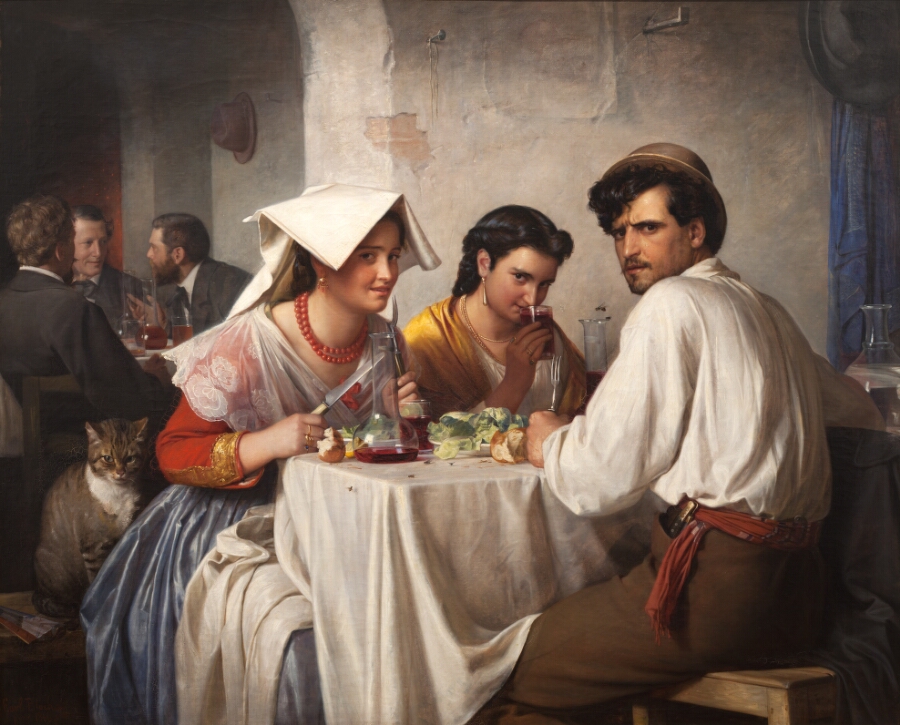
The turning point was Italy. Bloch lived there from 1859 to 1866, and on the way south he saw Rembrandt in the Netherlands, an encounter that stayed in his light for the rest of his life. In Rome he painted genre scenes with a sharp sense of humour, among them In a Roman Osteria (1866), and there in 1868 he married Alma Trepka. His Prometheus Unbound, shown in Copenhagen in 1865, made him famous at home.
Then came the commission that defined him. After the fire of 1859, Frederiksborg Castle was rebuilt with the support of the brewer J. C. Jacobsen, founder of Carlsberg, and Bloch was asked to paint twenty-three scenes from the life of Christ for the King’s Oratory in the castle chapel. He worked on them from 1865 to 1879, on copper rather than canvas, and they are still at Frederiksborg, now the Museum of National History. Alongside them he painted large altarpieces for churches in Denmark, Sweden and the Faroe Islands, including Christus Consolator (1875) for Hörup Church in Skåne. His wife died in 1886, leaving him with eight children, and he died of cancer four years later.
How to recognise a Bloch
- Rembrandt light, academic finish. A strong source of light picks out faces and hands, while the rest falls into warm shadow; the surface is smooth and carefully finished.
- Faces close enough to read. Bloch fills his pictures with individual, often weathered faces, each one carrying a separate reaction to the same event.
- A Christ who looks at you. In his religious paintings Christ is calm, human and physically present, often meeting the viewer’s eye instead of looking up to heaven.
- Wit in the everyday. His Italian genre scenes, like the osteria, use glances and small gestures to pull the viewer into the story as a participant.
That clarity is also why his work travelled so far. For more than forty years The Church of Jesus Christ of Latter-day Saints has used Bloch’s paintings, mostly from the Frederiksborg cycle, in its buildings, books and films, and Brigham Young University now owns two of his works.
Every Bloch painting we’ve explained
All Bloch essays →-
 1
1In a Roman Osteria (1866)
SMK – National Gallery of Denmark, Copenhagen
A young man glares at you from the tavern table, two women smile, and even the cat seems to judge. In Rome, Bloch made the viewer part of the joke.
-
 2
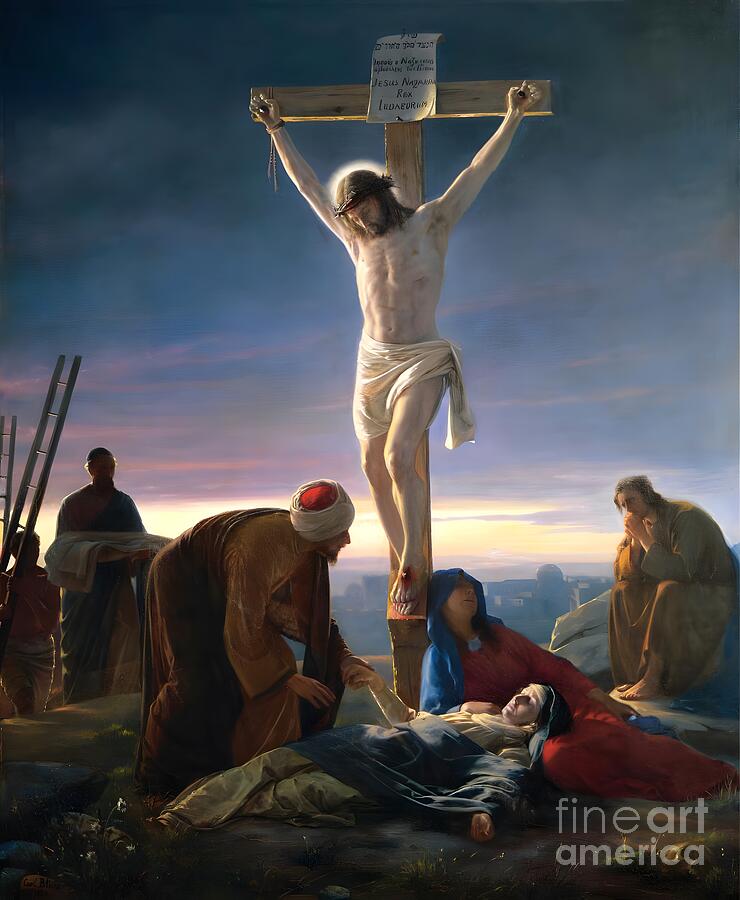
2Christ on the Cross (1870)
Museum of National History, Frederiksborg Castle
One of the twenty-three copper panels for the King’s Oratory: the hour itself, painted small and close, for a royal chapel rebuilt after the fire of 1859.
-
 3
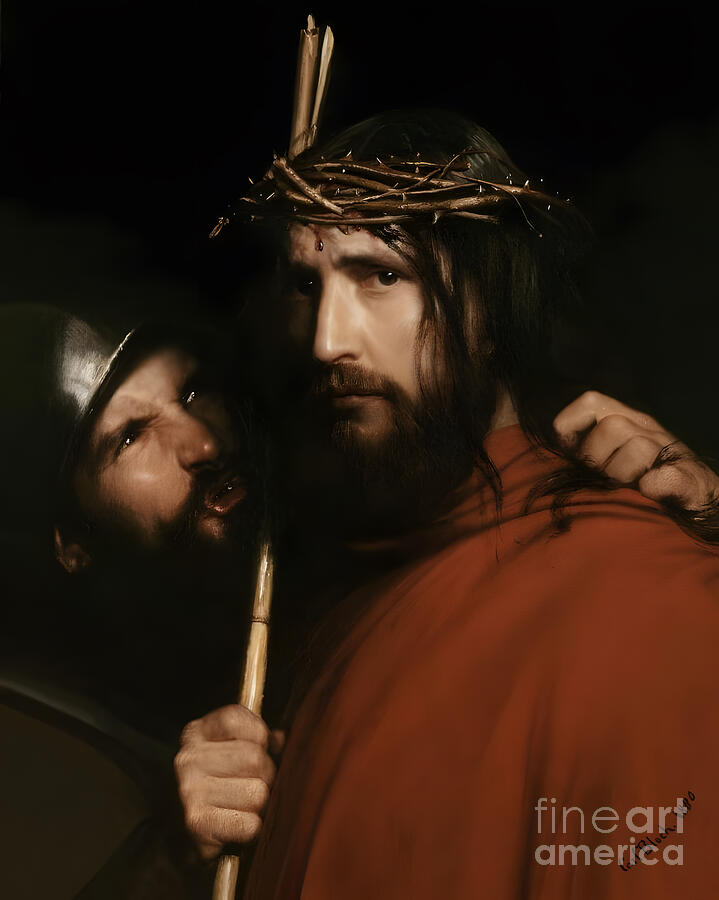
3Christ with Mocking Soldier (1880)
BYU Museum of Art, Provo, Utah
Crowned with thorns, Christ looks out of the picture while a soldier grins beside him. Not pain but weariness, painted the year after Bloch finished the Frederiksborg cycle.
Where to see Carl Bloch
Museum of National History, Frederiksborg Castle (Hillerød)
Frederiksborg Slot 10, 3400 Hillerød, Denmark · the twenty-three Life of Christ paintings in the King’s Oratory. Read our Frederiksborg museum guide.
SMK – National Gallery of Denmark (Copenhagen)
Sølvgade 48–50, 1307 Copenhagen · In a Roman Osteria and other works.
Hörup Church, Skåne (Sweden)
Hörup, Löderup parish, on the south coast of Skåne · the original Christus Consolator (1875) above the altar. Neighbouring Löderup Church has his Emmaus altarpiece of 1878.
BYU Museum of Art (Provo, Utah)
Brigham Young University, Provo · Christ with Mocking Soldier and Christ Healing at the Pool of Bethesda.
Watch: Bloch on our YouTube channel
The newsletter behind the paintings
New essays and the stories behind them, straight to your inbox. Or browse every painting by artist, period, theme and museum.
Some links are affiliate links; we may earn a commission at no extra cost to you.
Sources: Museum of National History at Frederiksborg (frederiksborg.dk); SMK – National Gallery of Denmark (open.smk.dk); Löderup parish, Church of Sweden (svenskakyrkan.se); Wikipedia, “Carl Bloch”.
Comments
Post a Comment