
Paintings You Can See at Frederiksborg Castle
Art travel guide · Hillerød, Denmark
Paintings You Can See at Frederiksborg Castle
North of Copenhagen, at the end of the S-train line, a Renaissance castle on three islets in a lake holds the largest portrait collection in Denmark and one of the most reproduced cycles of religious painting ever made: Carl Bloch’s twenty-three scenes from the life of Christ. Here is what to see, how to get there, and the essays that tell the stories behind the pictures.
Museum of National History, Frederiksborg Castle
More paintings at Frederiksborg →The Museum of National History at Frederiksborg
Frederiksborg Slot 10, 3400 Hillerød, Denmark
Know before you go
- Open every day of the year, Mondays included; regular hours 10 a.m. to 5 p.m. Check the official page for rooms closed for events or exhibitions.
- Adults 125 DKK; students and seniors (65+) 105 DKK; children and young people up to 17 free; free with the Copenhagen Card. No need to book in advance. One ticket covers the whole museum and all special exhibitions for the day.
- By train: the S-train runs directly from central Copenhagen to Hillerød Station, then about 15 minutes on foot along the Castle Lake or Slotsgade, or bus 301 or 302 to the castle.
- By car: free parking at Rendelæggerbakken 6, about a kilometre’s walk through the Baroque Garden.
-
 1
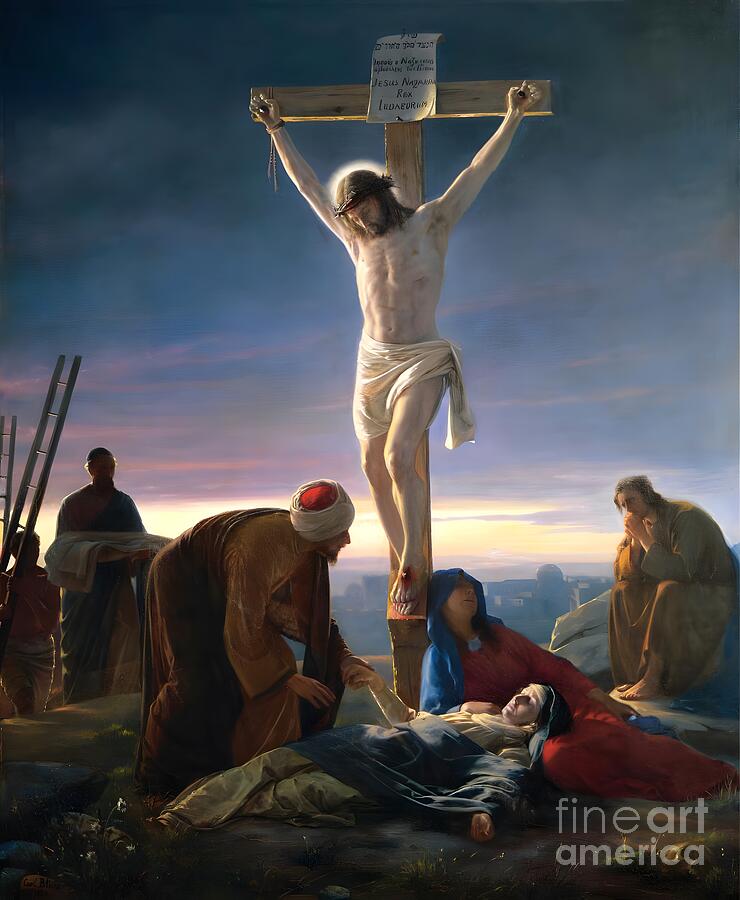
1Christ on the Cross
Carl Bloch · 1870
Painted on copper for the King’s Oratory, this is the hour itself: a small, close Crucifixion at sunset, part of the cycle Bloch worked on from 1865 to 1879.
Carl Bloch’s Life of Christ
Carl Bloch artist guide →In December 1859 a fire destroyed large parts of Frederiksborg, and the royal family stopped using it as a residence. The brewer J. C. Jacobsen, founder of Carlsberg, proposed turning the rebuilt castle into a museum of Danish history and offered to pay for it; the Museum of National History has been there since 1878. For the King’s Oratory beside the chapel, Carl Bloch painted twenty-three scenes from the life of Christ between 1865 and 1879.
They are not large. Bloch painted them on copper, close and bright, with Rembrandt’s kind of light falling on faces and hands. More than a century later they became some of the most reproduced religious images in the world, especially through The Church of Jesus Christ of Latter-day Saints, which has used them in its books, buildings and films for over forty years. Seeing the originals in the small, richly decorated oratory is a very different experience from meeting them in print.
Look out, too, for the castle itself: built for King Christian IV in the early seventeenth century on three islets in the Castle Lake, with the Great Hall, the chapel and the Baroque Garden. The portrait collection, the largest in Denmark, runs from the Middle Ages to a new portrait of King Frederik X.
Make a day of it: Bloch in Copenhagen
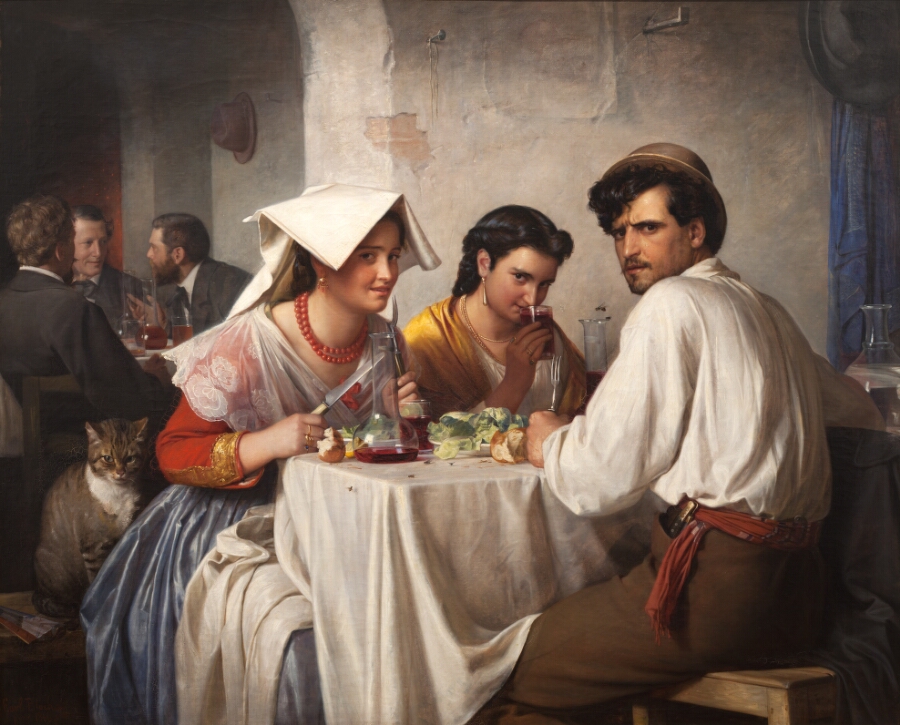
Back in the city, SMK – the National Gallery of Denmark – holds Bloch’s Roman genre scenes, painted before the Frederiksborg commission.
-
 2
2In a Roman Osteria
Carl Bloch · 1866 · SMK, Copenhagen
A young man glares at you from the tavern table, two women smile, and even the cat seems to judge. In Rome, Bloch made the viewer part of the joke.
Where to stay in Hillerød
Hillerød is an easy day trip from Copenhagen, but staying in town lets you see the castle in the quiet of the morning and walk the gardens and the lake at the end of the day.
The newsletter behind the paintings
New essays and the stories behind them, straight to your inbox. Or browse every painting by artist, period, theme and museum.
Some links are affiliate links; we may earn a commission at no extra cost to you.
Comments
Post a Comment