The Lamplighter by Erik Henningsen: When Dusk Was Still a Job (c. 1895)
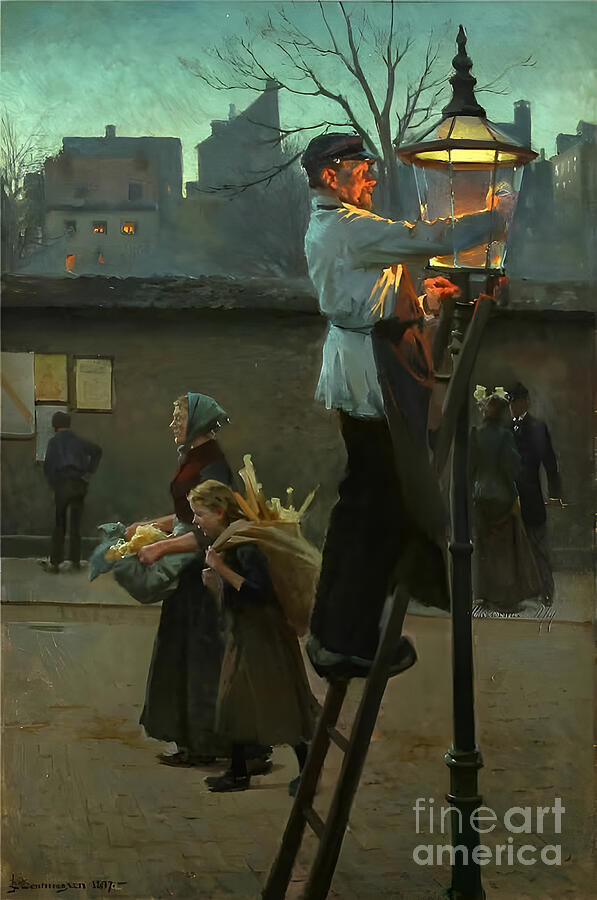
Dusk is a job, not a metaphor. In Erik Henningsen's The Lamplighter (c. 1895), a man leans into a street lamp with a pole and a flame while the city keeps walking. Cobblestones, coats, and half-lit faces fill the middle distance; the lamp is the hinge between day and night. This is Copenhagen street life painted by a Social Realist who knew how to make ordinary labour look monumental without turning it into a sermon.
Artist: Erik Ludvig Henningsen (1855-1930)
Date: c. 1895
Medium: Oil on canvas
Collection: Private collection
Notable fact: Henningsen made his name with Social Realist scenes of Copenhagen - workers, the poor, and the lighter textures of street life - around the same decade as this lamplighter
The Man Who Turns the City On
Before electric grids made night automatic, someone had to climb the dusk with a ladder of light. Henningsen's lamplighter is caught mid-task: body angled up, tools in hand, attention locked on the glass and flame. Around him the street does not pause for ceremony. Figures keep moving along the paving stones. Evening arrives as work, timed to the hour when lamps must be lit or the sidewalks go dark.
Social Realism With a Soft Edge
Henningsen trained at the Royal Danish Academy and spent the 1880s and 1890s painting exposed lives - the unemployed, women, children, the elderly - in pictures that could sting. He also painted the lighter side of urban Copenhagen: parades, dance pavilions, everyday traffic. The Lamplighter sits closer to that street-level register. It is not catastrophe. It is infrastructure made human: the person whose job is to keep the night walkable.
Light as Plot
Compositionally the lamp is both subject and stage light. Warm glow gathers on the worker and spills toward the passers-by, while cooler dusk still holds the farther street. Look at the contrast between the concentrated act of ignition and the blur of city motion behind it. The painting argues that modernity is not only factories and politics; it is also this small civic ritual repeated every evening until technology retired the trade.
A Danish Eye on the Sidewalk
Born in Hjorring and long based in Copenhagen, Henningsen belonged to a generation that treated contemporary city life as serious subject matter. His better-known canvases include hard Social Realist dramas such as Evicted (1892, Statens Museum for Kunst). The Lamplighter shows the complementary gift: patience with a single craft, rendered large enough that you feel the weight of the pole and the hurry of the hour.
Why the Dusk Still Works
Electric streetlights erased the profession and left the image. What remains is the poetry of a threshold - day surrendering, a city waiting for flame, one worker holding the switch. Look once for nostalgia. Look again for labour: the quiet skill that made night streets possible before the grid took over.
Own This Painting
Hang Henningsen's dusk - the lamplighter, the cobblestones, and the first warm street lamp of evening.
Related on @SapiensVerbum: another Erik Henningsen canvas - Mother and Children on a Beach Picnic - in a long 4K art-and-music session.


Comments
Post a Comment