The Lady of Shalott by Waterhouse: Curse, Mirror, and the River (1888)
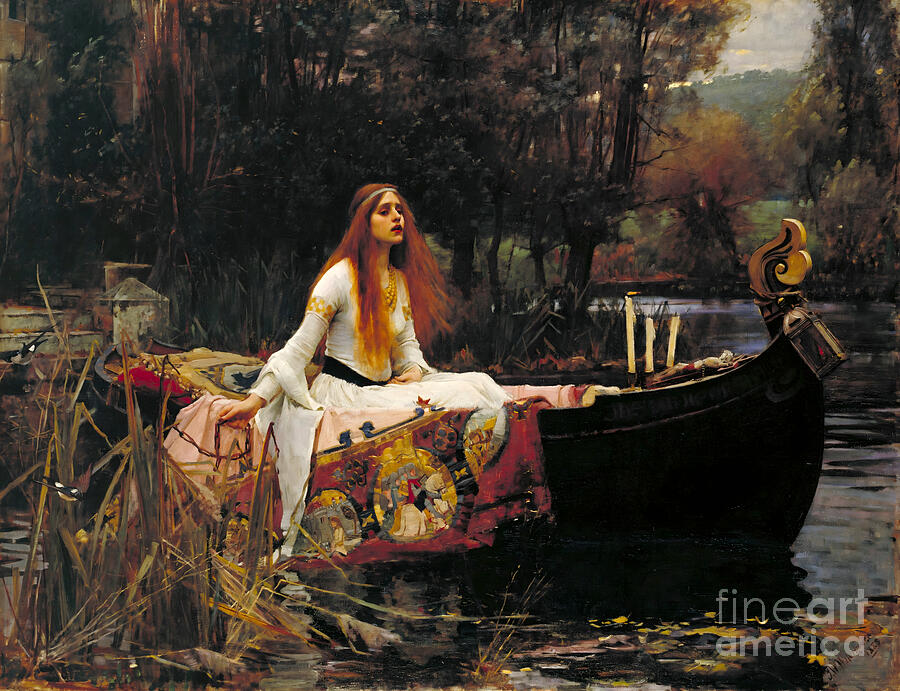
A woman in white sits in a small boat among reeds, a woven tapestry crumpled beneath her, candles and a crucifix at the prow. Two of three candles are already out. In John William Waterhouse's The Lady of Shalott (1888), the voyage has started - and the poem has already decided how it ends.
Artist: John William Waterhouse (1849-1917)
Date: 1888
Medium: Oil on canvas
Collection: Tate Britain, London
Notable fact: Inspired by Tennyson's poem; Waterhouse painted the subject again in 1894 and 1915; given to the public by Sir Henry Tate in 1894
Tennyson's Curse on the Water
Alfred Lord Tennyson's narrative poem traps a young woman - loosely kin to Elaine of Astolat - in a tower near Camelot. Forbidden to look directly at the world, she watches life in a mirror and weaves what she sees. When she turns toward Sir Lancelot, the curse breaks over her. Waterhouse shows the aftermath of that choice: she leaves by boat, seated on her own weaving, toward death.
Symbols That Keep Time
Lantern light, crucifix, and guttering candles mark a life counting down. The bright dress pulls the eye against darker banks; swallows and English river plants anchor the fantasy in observed nature. Pre-Raphaelite precision - vivid color, exact detail - serves a tragic clock.
Three Versions, One Gift
Waterhouse returned to the Lady in 1894 and 1915. This 1888 canvas, later given by Sir Henry Tate for public keeping, remains the best-known. Look once for Arthurian melancholy. Look again for a woman who chose sight over safety.
Own This Painting
Hang Waterhouse's Lady of Shalott - the white dress, the drifting boat, and the curse already underway.
Watch the video essay on @SapiensVerbum on YouTube.


Comments
Post a Comment