Ophelia by Millais: The Most Famous Death in Art History (1852)
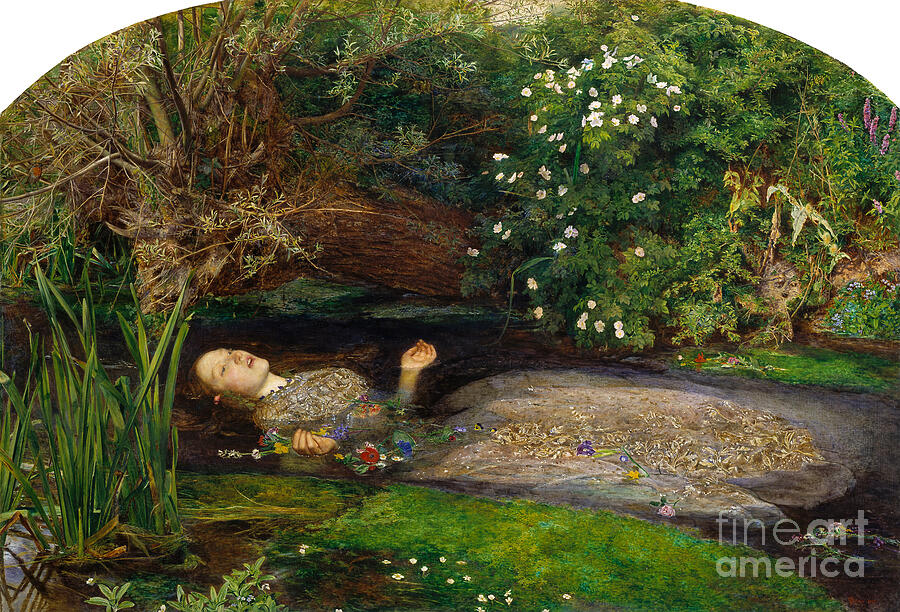
She floats among flowers with open hands, mouth parted on a last breath or an unfinished line. John Everett Millais's Ophelia (1851-1852) turns Shakespeare's drowned girl into Pre-Raphaelite evidence: every leaf named, every symbol loaded, the Hogsmill River made as exact as grief.
Artist: John Everett Millais (1829-1896)
Date: 1851-1852
Medium: Oil on canvas
Collection: Tate Britain, London
Notable fact: Model Elizabeth Siddal posed in a bathtub; Millais painted the landscape on site near the Hogsmill with Holman Hunt
Faithful to Gertrude's Report
Millais follows the queen's speech: Ophelia falling while gathering flowers. Arms open like a quiet crucifixion; pale face and half-open eyes hold the instant after speech fails. The arched top edge - a Pre-Raphaelite habit - frames nature as chapel.
Botany as Emotion
Pansies, willow, nettles, daisies, and more: Shakespeare supplies some; Millais adds others (poppies, fritillaries, narcissi) until the bank becomes a dictionary of misfortune, lost innocence, and early death. Detail is not filler. It is the play's imagery made botanical fact.
Siddal in the Water
Eighteen-year-old Elizabeth Siddal lay in a tub so fabrics and immersion could be studied. When heating lamps went out unnoticed, the session turned dangerous - a studio legend that sticks because the painting already feels like a body risking cold for truth.
Why This Death Became Famous
Ophelia taught later artists and photographers that tragedy could be hyper-specific. The image escaped the gallery into culture. Stand with Tate's canvas and the flowers stop being pretty. They become the inventory of a life ending mid-song.
Own This Painting
Hang Millais's Ophelia - the river flowers, the open hands, and the most famous death in Victorian paint.
Watch the video essay on @SapiensVerbum on YouTube.


Comments
Post a Comment