The Fighting Temeraire by J.M.W. Turner: The Last Voyage of a Trafalgar Hero (1839)
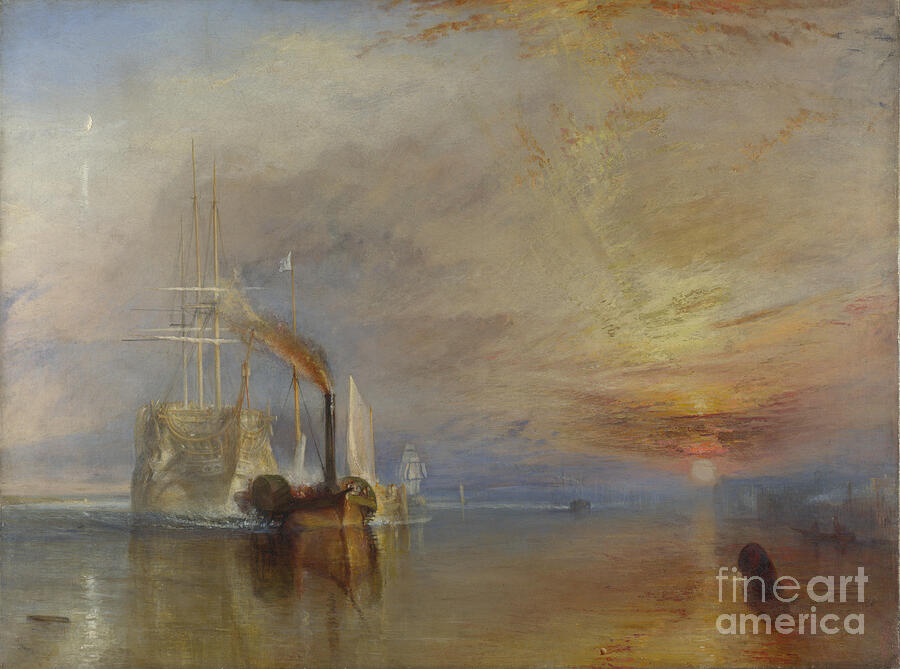
A ghostly warship, pale as bone, glides up the river behind a squat black tug belching smoke and fire. Beyond them the sun goes down in a blaze of orange and red. J.M.W. Turner's The Fighting Temeraire (1839) shows a veteran of Trafalgar on its way to the breaker's yard, and it turns a routine piece of salvage into one of the great elegies in British painting.
Artist: Joseph Mallord William Turner (1775–1851)
Date: 1839
Medium: Oil on canvas
Collection: The National Gallery, London (Turner Bequest, 1856)
Notable fact: Voted the greatest painting in a British collection in a 2005 BBC Radio 4 poll, and chosen for the back of the Bank of England £20 note in 2020
A Ship That Fought at Trafalgar
HMS Temeraire was a 98-gun ship of the line. At Trafalgar in 1805 she sailed into action directly behind Nelson's flagship, Victory, and came to the aid of the flagship in the thick of the fighting. The British public never forgot it, and the ship earned the nickname "the Fighting Temeraire". By 1838, though, she was obsolete. The Admiralty sold her, and she was towed up the Thames to Rotherhithe to be broken up for timber and copper.
Old Sail, New Steam
Turner builds the whole picture on a contrast. The warship is tall, pale and silent, painted in delicate whites and golds as if she were already a memory. The tug is low, dark and noisy, its funnel pouring smoke, its paddle churning the water. Viewers in 1839 did not need that spelled out: the age of sail that had won Britain its empire was giving way to the age of steam, and the painting lets the old world go with dignity while the new one does the dirty work.
Turner's Artistic Licence
The scene is not a record of what happened. By the time of her last voyage the Temeraire had been stripped of her masts and rigging, and Turner gives them back to her. The dramatic sunset is placed for effect rather than accuracy. None of this was a mistake. Turner was painting the meaning of the event, and he treated the facts the way a poet would, keeping only what served the feeling.
The Painting Turner Would Not Sell
The picture was a success when it was shown at the Royal Academy in 1839, and Turner refused offers for it for the rest of his life, calling it his "darling". When he died in 1851 he left it to the nation along with hundreds of other paintings, and it entered the National Gallery as part of the Turner Bequest. It has belonged to the nation ever since.
Why It Still Moves People
Every generation finds its own version of the Temeraire: something proud and useful that time has quietly made redundant. That is why the painting keeps winning polls and why it was chosen for British banknotes. Turner never states the lesson. He lets the light do it, burning out across the sky as the old ship slides toward its end.
Get J.M.W. Turner's The Fighting Temeraire as a museum-quality print, canvas, or poster from the Sapiens Verbum print shop.
Shop This Print →
Comments
Post a Comment