Les Demoiselles d'Avignon by Picasso: The Painting That Broke Cubism Open (1907)
Five nudes face you like a broken wall. Two wear faces that look carved, not painted; the space behind them shatters into planes. Pablo Picasso's Les Demoiselles d'Avignon (1907) does not gently invent Cubism - it kicks the door in. A Barcelona brothel scene becomes the twentieth century's most famous argument against polite looking.
Artist: Pablo Picasso (1881-1973)
Date: 1907
Medium: Oil on canvas
Collection: Museum of Modern Art (MoMA), New York
Notable fact: Painted 1906-1907; long kept in Picasso's studio before public shockwaves; often treated as Cubism's ignition point
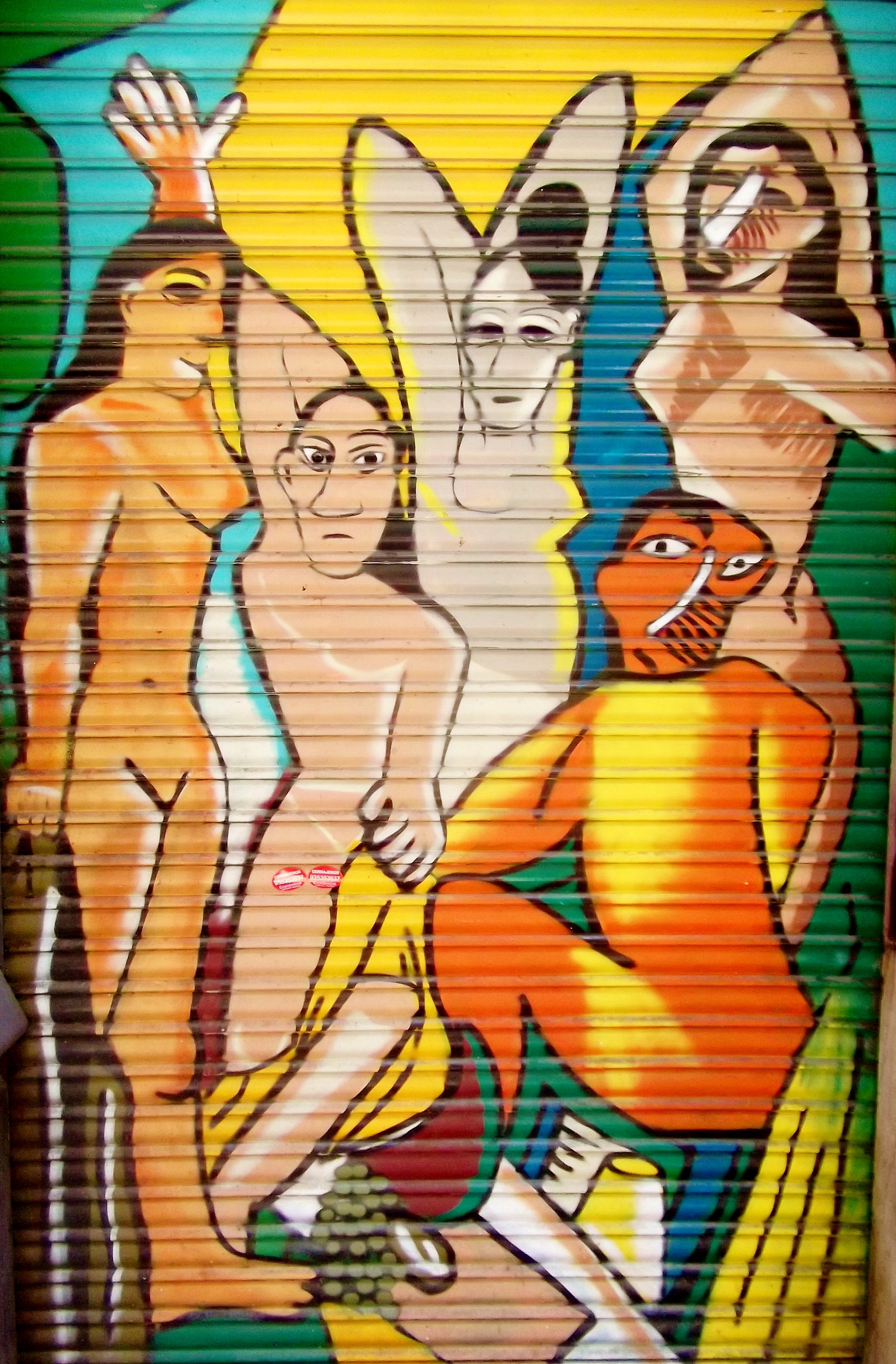
From Soft Bodies to Hard Facets
Early studies still nod to classical nudes and Iberian sculpture. The finished canvas hardens everything: angular breasts, curtain-like folds, eyes that do not share one perspective. African and Iberian mask traditions press into the two figures at right - not costume exoticism so much as a tool for rewriting the face as geometry and force.
A Brothel Without Seduction
The title points to Avignon Street in Barcelona's red-light district. Desire is present as subject, absent as comfort. The women confront rather than invite; the viewer is caught in their stare. Picasso strips the academic nude of its alibi - myth, goddess, allegory - and leaves sex, fear, and form on the same surface.
Why Cubism Needed This Break
Friends were unsettled; the painting stayed private for years. Yet its smashed space and multiple viewpoints trained a generation to stop treating the canvas as a window. Analytic Cubism would refine the violence into grey puzzles; Demoiselles keeps the violence hot.
Still Difficult on Purpose
Modern art's origin myths love this picture because it still refuses to be pretty. Look once for five figures. Look again for a world that no longer agrees to sit still for your eye.
Watch the video essay on @SapiensVerbum on YouTube.


Comments
Post a Comment