Durer's Self-Portrait of 1500: Elegance, Mastery, and Christ-like Gaze
He faces you head-on, fur collar framing a calm that feels almost liturgical. The right hand touches the coat as if blessing cloth; the gaze does not flinch. Albrecht Durer's Self-Portrait of 1500 is not a casual mirror study. It is a Northern Renaissance claim: the artist as someone worth meeting eye to eye - elegance, mastery, and a Christ-like frontality that still startles.
Artist: Albrecht Durer (1471-1528)
Date: 1500
Medium: Oil on panel
Collection: Alte Pinakothek, Munich
Notable fact: Frontal, half-length likeness with fur collar; often compared to traditional images of Christ Pantocrator in its direct symmetry
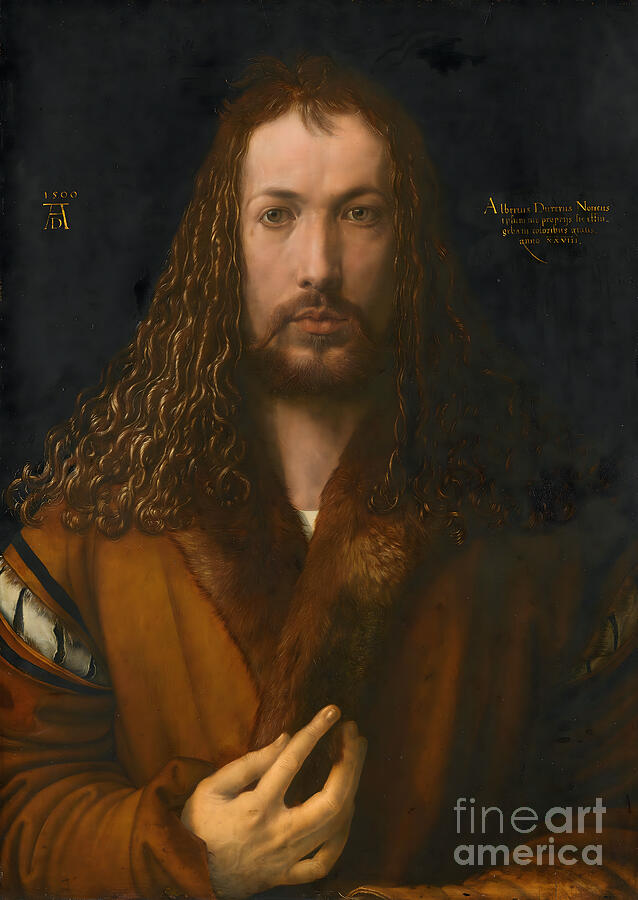
Frontality as Ambition
Most earlier self-portraits turn three-quarters, like polite guests. Durer chooses the sacred axis used for holy icons: centred, symmetrical, inescapable. Long curling hair and a dark coat with rich fur read as expensive and intentional. He is twenty-eight, already a printmaking star, and he paints himself as a figure of dignity rather than workshop anonymity.
Hand, Coat, Gaze
The fingers at the fur are a small sermon in craft - each strand of hair and pelt observed with engraver's patience. The face is idealized enough to feel timeless, specific enough to be a person. Inscription and monogram culture around Durer's work remind you this is branding as well as devotion: the artist signing the age.
North Meets Italy Without Apology
Durer had looked hard at Italian art and brought its confidence home to Nuremberg. This panel fuses Northern detail with a monumental self-possession more often reserved for princes or saints. The result is neither pure humility nor pure vanity. It is professional theology: making images can be a high calling.
Why the Gaze Still Holds
Stand before it and the centuries thin. Look once for costume and craft. Look again for an artist who dared to occupy the centre of the panel as if painting itself were a form of presence.
Own This Painting
Hang Durer's 1500 self-portrait - the fur collar, the frontal gaze, and a Renaissance artist meeting you as an equal.
Watch the video essay on @SapiensVerbum on YouTube.


Comments
Post a Comment