Christ in the Storm on the Sea of Galilee: Rembrandt's Stolen Seascape (1633)
The mast tilts. Disciples claw at ropes while Christ sits in a pocket of light. Rembrandt's Christ in the Storm on the Sea of Galilee (1633) is his only seascape - and since 1990 it has been a masterpiece you mostly meet as absence: stolen from the Isabella Stewart Gardner Museum and still missing.
Artist: Rembrandt van Rijn (1606-1669)
Date: 1633
Medium: Oil on canvas
Collection: Stolen (formerly Isabella Stewart Gardner Museum, Boston)
Notable fact: Rembrandt's only known seascape; taken in the 1990 Gardner heist (largest US art theft) and never recovered
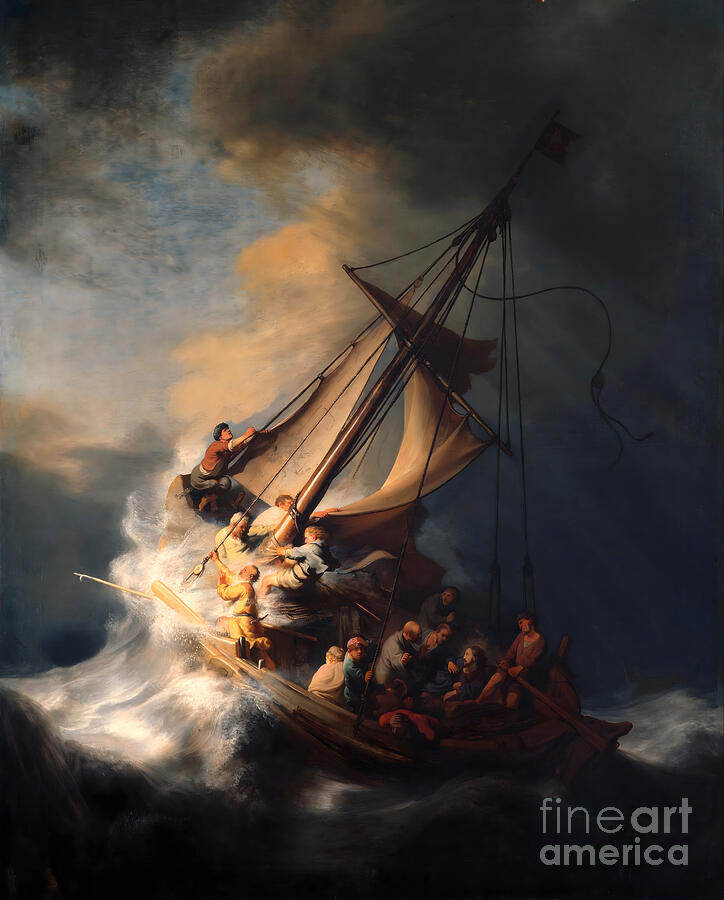
Miracle as Weather
The Gospel storm (Mark 4) becomes baroque theatre: panic in the dark water, calm in the illuminated Christ. Rembrandt's chiaroscuro - tenebrism with Dutch muscle - makes faith visible as contrast. The disciples fight physics; the light argues for another power.
Early Ambition
Painted at twenty-nine, the canvas shows a young Rembrandt claiming history painting at full volume. He adapted earlier print designs (Collaert after Maerten de Vos) then rebuilt the drama in his own light. Bernard Berenson later helped place it with Isabella Stewart Gardner; for decades Boston owned the tempest.
Empty Frame
On 18 March 1990 thieves took this painting with twelve other works. The Gardner still hangs empty frames as open wounds. Loss did not shrink the image's fame; it changed how we see it - half as Rembrandt, half as unsolved crime.
Why the Storm Remains
Even in reproduction the composition teaches fear and trust in one glance. Art history keeps the story; the thieves keep the object. Looking becomes a form of waiting.
Own This Painting
Hang Rembrandt's storm - the tilting mast, the lit Christ, and the seascape the thieves could not erase from memory.
Watch the video essay on @SapiensVerbum on YouTube.


Comments
Post a Comment