After the Bath by Raimundo de Madrazo: Subtle, Seductive Beauty
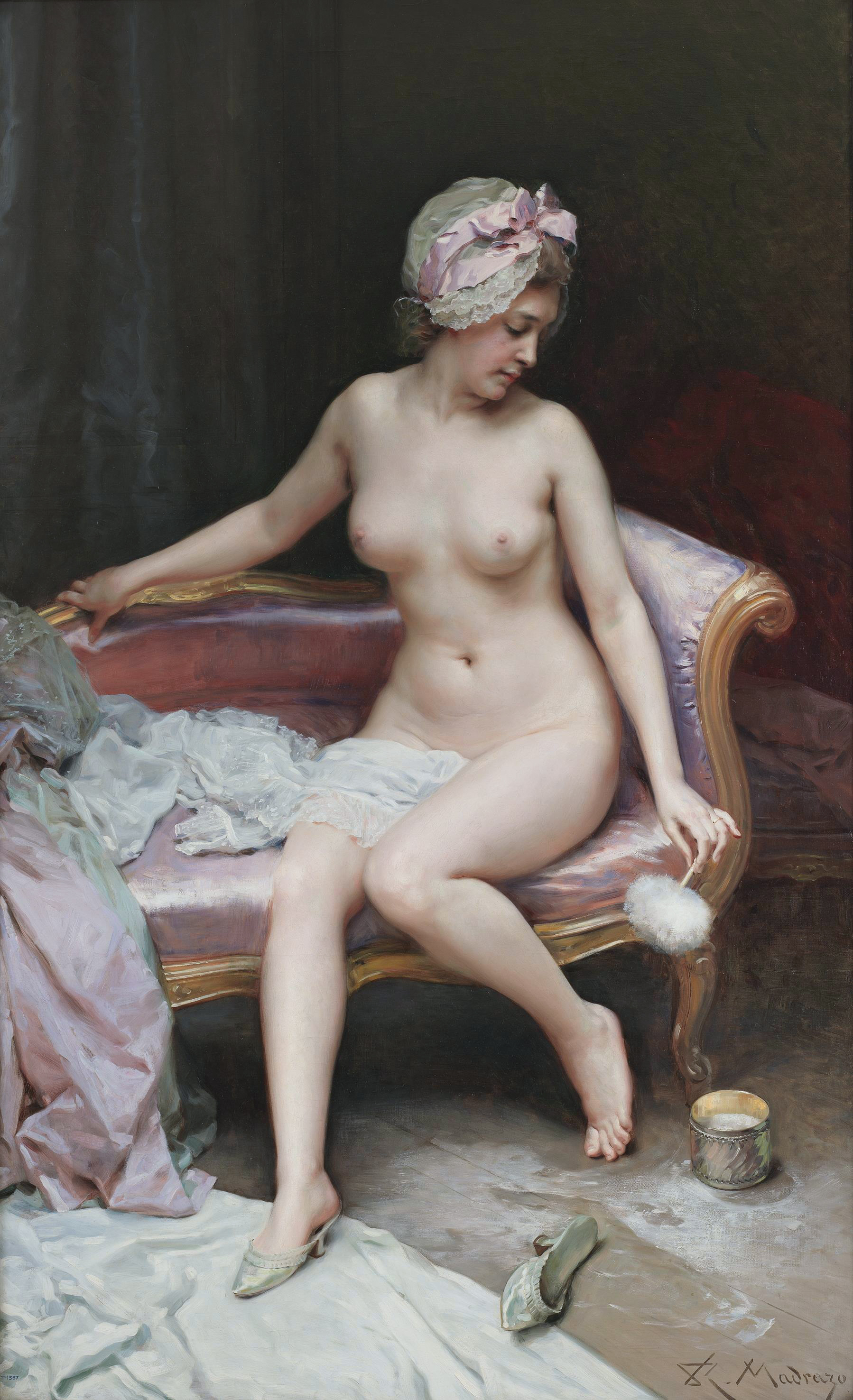
Fresh from water, a woman half-wrapped in cloth - sensual, almost playful, and carefully priced for cosmopolitan taste. Raimundo de Madrazo's After the Bath (c. 1895) belongs to the late-nineteenth-century toilette genre: private beauty staged as deluxe intimacy for collectors who wanted modern elegance without scandal's full cost.
Artist: Raimundo de Madrazo (1841-1920)
Date: c. 1895
Medium: Oil on canvas
Notable fact: Spanish painter of polished society and demi-monde themes; toilette scenes prized for texture and pearly skin
Demi-Monde Charm
Madrazo offers an archetype that appealed especially to American buyers: innocence edged with mischief, sensuality kept stylish. The bath aftermath is an excuse to paint skin as nacre and fabric as touchable wealth - a fantasy of access to a woman's unguarded minute.
Brush and Light
Soft modelling builds volume; loose background strokes set off precise flesh and translucent textiles. Blues, crimsons, and browns frame the clear centre. The realism is selective: body and cloth get devotion; the room can dissolve into sketch.
Company He Kept
Rococo French grace meets late Academic finish. Admiration for painters such as Lefebvre, Henner, and Bouguereau shows in the controlled polish. Madrazo was not inventing the toilette subject; he was refining it for a market that collected modernity as texture.
Why the Moment Lingers
The painting sells a pause - between privacy and display - that portraiture alone cannot. Look for the skin first. The social story is in how expensive that softness was meant to feel.
Watch the video essay on @SapiensVerbum on YouTube.


Comments
Post a Comment