The Night Watch by Rembrandt: Militia Drama in Broad Daylight (1642)
A captain steps forward into a spear of light; a lieutenant in pale gold keeps pace; muskets, drums, and a small girl with a chicken flash through the gloom. Rembrandt's so-called Night Watch (1642) is not a night scene at all - later varnish darkened it - but a daylight militia portrait exploded into action. Group likeness becomes theater.
Artist: Rembrandt van Rijn (1606-1669)
Date: 1642
Medium: Oil on canvas
Collection: Rijksmuseum, Amsterdam
Notable fact: Daytime militia portrait later nicknamed Night Watch after darkened varnish; radically dynamic compared with static Dutch group portraits
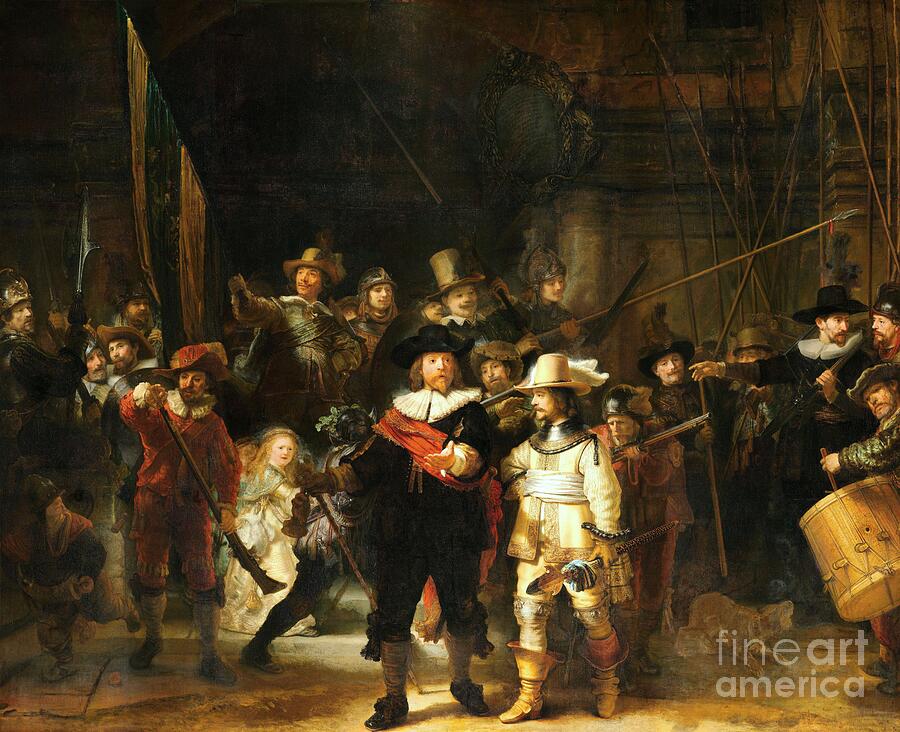
Not a Night Piece
Officially The Company of Captain Frans Banninck Cocq and Lieutenant Willem van Ruytenburch, the canvas hung in Amsterdam's Kloveniersdoelen. Rembrandt refused the usual stiff row of faces. Instead he staged departure: gestures mid-command, weapons angled, depth carved by chiaroscuro so strong that later centuries mistook day for night.
Who Gets the Light
Cocq in black and Ruytenburch in luminous costume form the engine. Around them, civic guardsmen become characters - loading, pointing, beating a drum. The mysterious girl in gold may carry symbols of the kloveniers (the claw). Rembrandt sells hierarchy and chaos at once: leaders advance; the company swirls.
Damage, Fame, Survival
Trimmed for a new hall, attacked more than once, endlessly cleaned and studied, the painting became a Dutch national emblem. The Rijksmuseum's recent research projects only underline what viewers already feel: this is portraiture that behaves like cinema.
Why the March Still Starts
Most group portraits wait for you. Rembrandt's company is already leaving. You arrive late to the order, caught in the wake of civic pride and paint that still seems to move.
Own This Painting
Hang Rembrandt's marching company - the captain, the gold lieutenant, and daylight drama mistaken for night.
Watch the video essay on @SapiensVerbum on YouTube.


Comments
Post a Comment