The Cave of the Storm Nymphs by Poynter: Beauty in the Sea's Shadow (1903)
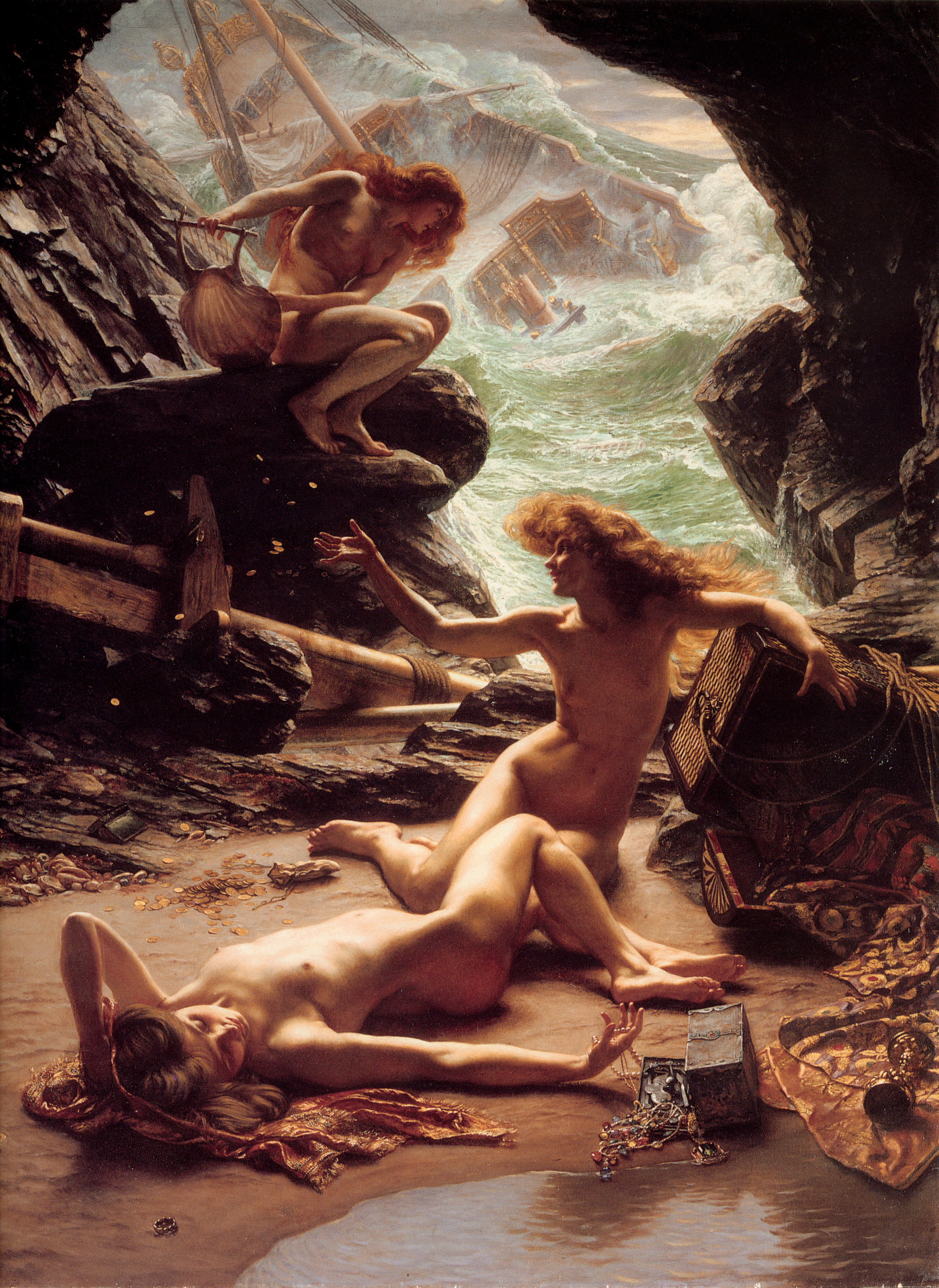
Three bare nymphs lounge at the mouth of a sea cave while surf boils beyond them. One toys with treasure; light from outside the cavern slides across skin, shell, and hair. In Sir Edward Poynter's The Cave of the Storm Nymphs (1903), beauty is the bait - and the storm is already writing the ending.
Artist: Sir Edward John Poynter (1836-1919)
Date: 1903
Medium: Oil on canvas
Notable fact: Late academic myth picture by a former president of the Royal Academy; triangular grouping of three sea nymphs
Sirens Without the Soft Focus
Poynter, Paris-born, London-trained, and later president of the Royal Academy, specialized in large historical and mythological canvases. Here the nymphs form a tight triangular group against restless water. They lure sailors to ruin while remaining oddly indifferent to the riches around them. Allure is their work; wreckage is collateral.
Light Against the Tempest
Despite the weather, an outside light source models their bodies with academic care - contours, flesh, and an almost theatrical glow in hair and an incandescent shell-harp. Color and illumination make the cave feel otherworldly; the sea behind them stays a threat, not a postcard. Poynter's finish is polished, but the subject is predation dressed as grace.
Academic Myth at the Turn of the Century
By 1903, tastes were shifting, yet Poynter still trusted composition, anatomy, and storytelling. The Cave of the Storm Nymphs shows how late Victorian and Edwardian academic art could stage danger inside perfect surfaces. Look once for the nude idyll. Look again for the water that does not forgive.
Watch the video essay on @SapiensVerbum on YouTube.


Comments
Post a Comment