Diogenes and Alexander by Langetti: Stand Out of My Sunlight (c. 1650)
A king in full command of the world leans toward a half-naked man who will not stand up for him. Sunlight matters more than empire. In Giovan Battista Langetti's Diogenes and Alexander (c. 1650), the punch line of an ancient anecdote becomes Baroque theatre: power arrives with attendants; wisdom stays seated in the dirt and asks only that the shadow move.
Artist: Giovan Battista Langetti (1625-1676)
Date: c. 1650
Medium: Oil on canvas
Collection: Pinacoteca Querini Stampalia, Venice
Notable fact: Diogenes asks Alexander to stand out of his sunlight; the king answers he would wish to be Diogenes if he were not Alexander
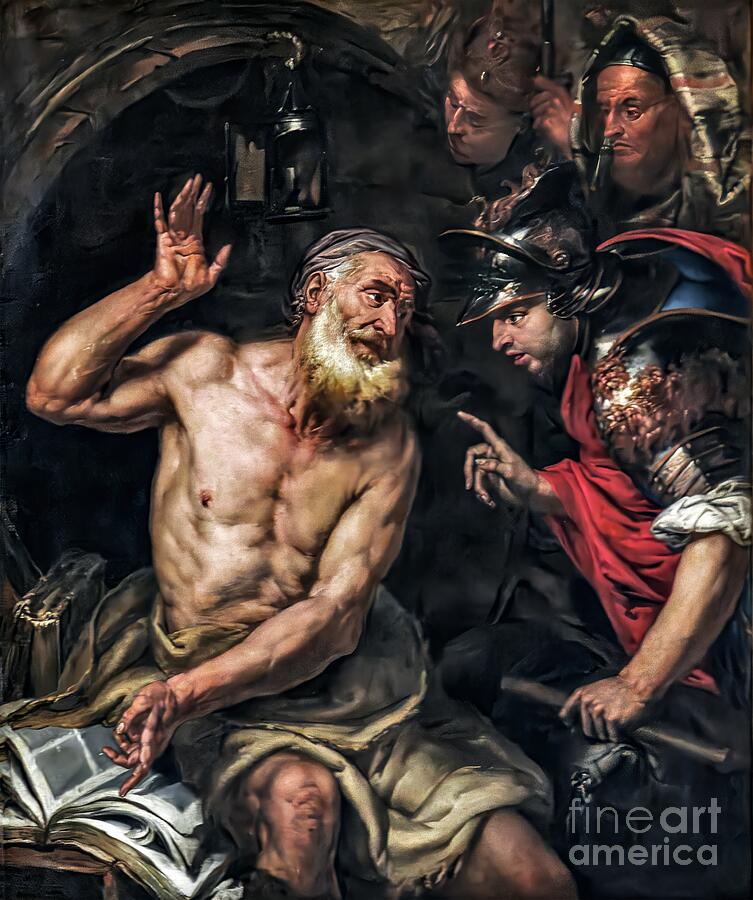
Conqueror Meets Cynic
Ancient writers place Alexander at Corinth, flush with victory, offering Diogenes any favour he might name. The Cynic, living with almost nothing, answers that the king is blocking the sun. Langetti belongs to a long visual tradition - dozens of versions survive - that loves this collision of velvet and barrel, crown and contempt for convention.
Bodies That Argue Without Words
Baroque painting thrives on contrast, and Langetti loads it. Alexander's group is upright, clothed, and socially arranged; Diogenes is low, weathered, and almost animal in his ease. The king bends; the philosopher does not rise. Hierarchy is reversed in a single pose: the man who owns armies must lean down to hear the man who owns a tub.
A School Named for Dogs
Diogenes helped shape Cynic thought - a hard preference for honesty over manners, simplicity over luxury. The name may track the Cynosarges gymnasium in Athens, but the reputation stuck: public rudeness as philosophy. Langetti's canvas is not a polite history lesson. It is an image of someone who would rather keep his patch of sun than accept a kingdom's gifts.
Why the Insult Still Flatters
Alexander leaves impressed, not insulted - at least in the story painters prefer. That twist is the hook. The painting asks whether greatness means accumulation or refusal. Look once for the royal retinue. Look again for the patch of light Diogenes refuses to surrender.
Own This Painting
Hang Langetti's unlikely summit - the king who offers everything, and the philosopher who only wants the sun.
Watch the video essay on @SapiensVerbum on YouTube.


Comments
Post a Comment