Nymphs and Satyr by Bouguereau: Ambition, Desire, and the Chase (1873)
Four nymphs haul a reluctant satyr toward cold water. One hoof is already wet; panic and desire share the same muscles. William-Adolphe Bouguereau's Nymphs and Satyr (1873) debuted at the Paris Salon with a line from Statius - and a critic's claim that it was "the best painting of our generation."
Artist: William-Adolphe Bouguereau (1825-1905)
Date: 1873
Medium: Oil on canvas
Collection: Sterling and Francine Clark Art Institute, Williamstown
Notable fact: Salon 1873 success; bought by John Wolfe for 35,000 francs; later hung in a New York hotel bar, then stored as "offensive," acquired by Robert Sterling Clark in 1942
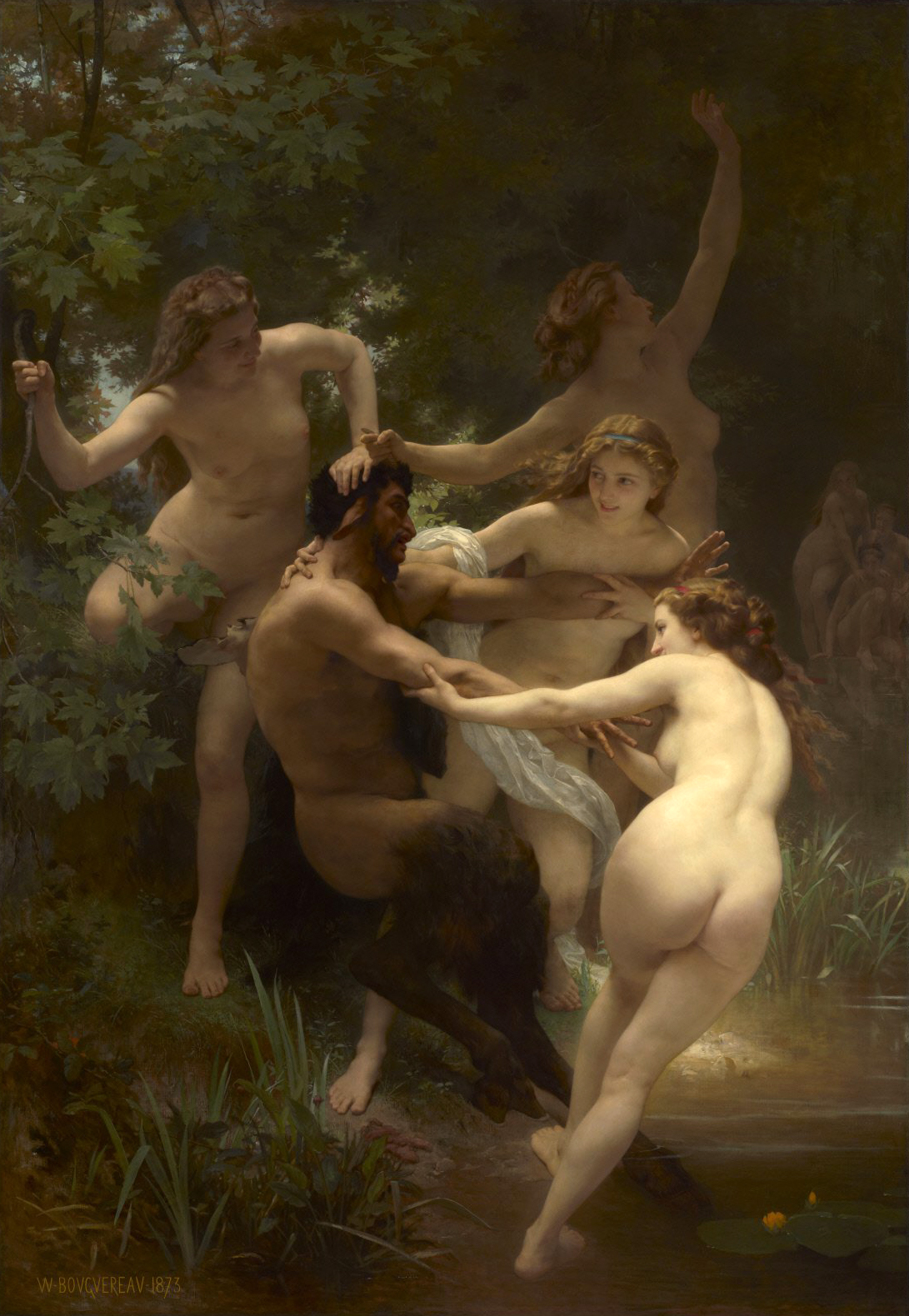
Myth as Chase
Surprised while bathing, some nymphs retreat to shadow; the braver ones drag the lascivious satyr toward the pool he fears. Statius supplies the joke: hairy, unable to swim, he will not trust deep water. Bouguereau turns that verse into interlocking bodies - academic drawing at full choreography.
Salon Timing
Shown a year before the Impressionists' first group exhibition, the canvas is everything modernists would reject: polish, mythology, crowd-pleasing flesh. Collectors disagreed with the avant-garde. Wolfe displayed it among French Academic trophies; American public life then dragged it through hotel bar fame and prudish storage.
Clark's Rescue
Robert Sterling Clark found the stored painting in 1942 and made it a centrepiece in Williamstown. Restoration before 2012 refreshed the surface. The Clark still calls it among the largest and most beloved works in the collection - ambition you can measure in square feet and in how many hands pull one satyr.
Why the Struggle Entertains
Desire here is comic and dangerous at once. Bouguereau's skill makes the moral light: beauty does the wrestling. Watch the wet hoof. The whole plot balances on that inch of water.
Watch the video essay on @SapiensVerbum on YouTube.


Comments
Post a Comment