Prometheus Bound by Rubens & Snyders: The Rebellion of Immortal Fire (c. 1618)
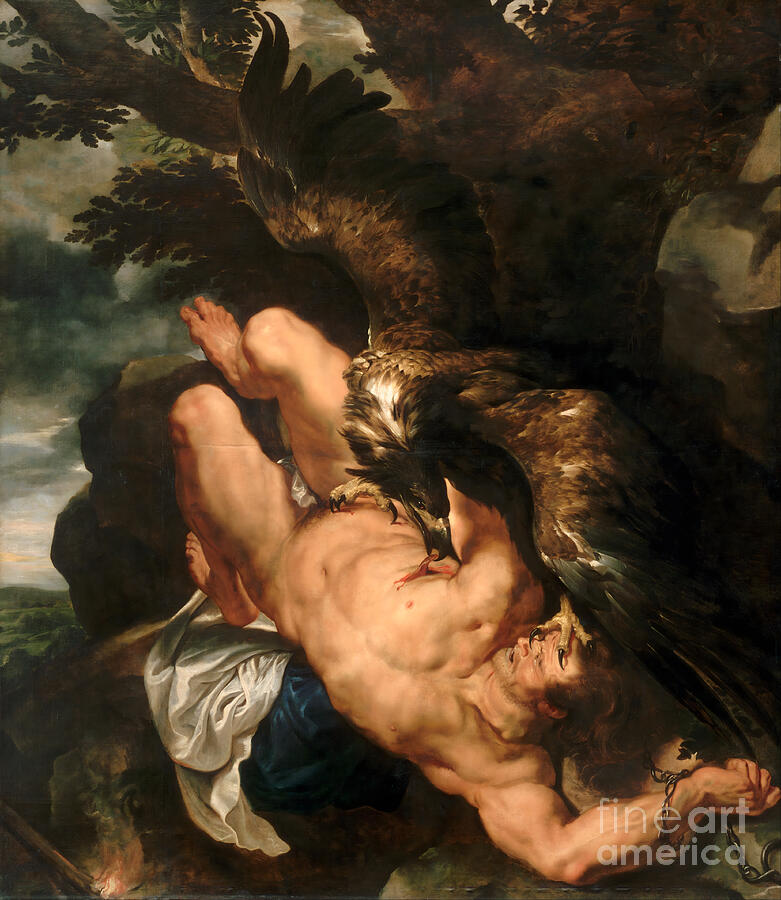
An eagle tears into a chained Titan's torso; guts gleam; fists clench; hair flies. Prometheus's eyes meet the bird's as if consciousness itself were part of the torment. In Peter Paul Rubens and Frans Snyders's Prometheus Bound (c. 1611-1618), punishment is not abstract theology. It is anatomy under attack.
Artist: Peter Paul Rubens (1577-1640) and Frans Snyders (1579-1657)
Date: c. 1611-1618
Medium: Oil on canvas
Collection: Philadelphia Museum of Art
Notable fact: Collaboration: Rubens on the Titan, Snyders on the eagle; myth of fire stolen for humankind
Fire for Humans, Chains for the Thief
In the Greek myth, Prometheus helps secure Zeus's rule, then defies him by giving fire and knowledge to humanity. The sentence is endless: bound on the Caucasus while an eagle eats his liver each day. Rubens makes the body Michelangelo-strong - Roman and Florentine lessons in muscle - while Venetian color memory warms the drama. Snyders, the great animal painter, gives the eagle its terrible beauty.
Agony That Still Looks Back
Twisted legs, bloody wound, and locked gaze keep Prometheus from becoming a passive victim. Ancient thought often seated intelligence in the liver; the bird attacks the seat of mind and soul. Suffering and resistance share one face.
Baroque Duality
The canvas holds both horror and formal splendor: feathers, flesh, and diagonal force. It asks whether creativity and rebellion are worth the cost - and answers by making the cost unforgettable. Look once for the myth. Look again for a mind that refuses to go dark.
Own This Painting
Hang Rubens and Snyders' Prometheus - the eagle's beak, the chains, and rebellion that will not die.
Watch the video essay on @SapiensVerbum on YouTube.


Comments
Post a Comment