Carnation, Lily, Lily, Rose by Sargent: Lantern Light at Dusk (1886)
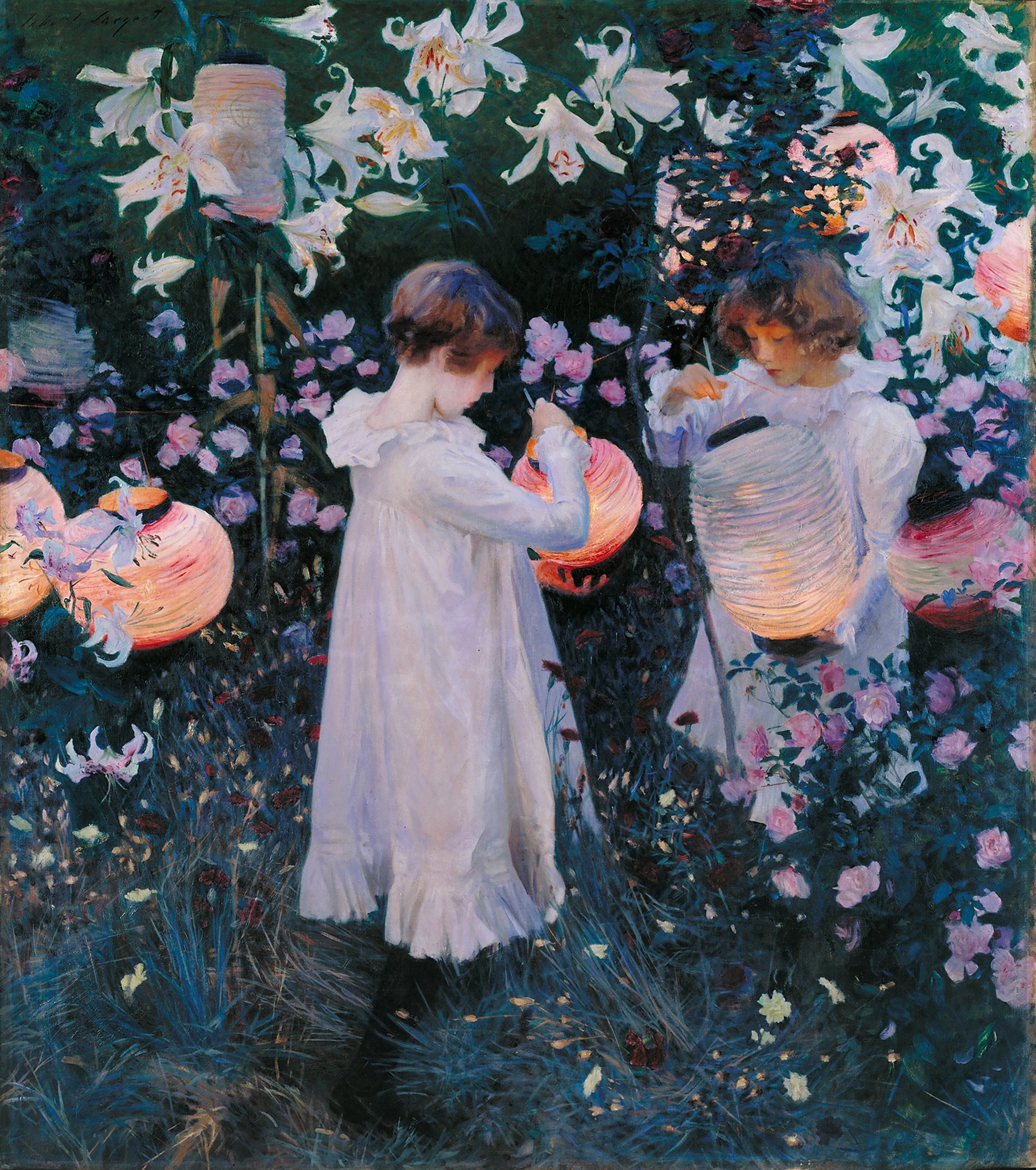
Twilight in an English garden, and two girls light paper lanterns among carnations, lilies, and roses. The flowers give the painting its singsong title; the hour gives it its spell. John Singer Sargent's Carnation, Lily, Lily, Rose (1885-1886) is less a portrait sitting than a chase after one fragile colour of dusk - warm lantern glow against cool leaves, childhood held in the few minutes before night wins.
Artist: John Singer Sargent (1856-1925)
Date: 1885-1886
Medium: Oil on canvas
Collection: Tate Britain, London
Notable fact: Painted at Broadway, Worcestershire, with Dolly and Polly Barnard as models; sensation at the Royal Academy in 1887
Chasing the Exact Minute
Sargent worked outdoors at his friends' garden in Broadway, returning each evening for the same brief light. Chinese lanterns found on site became props; the Barnard sisters became the calm centre. The picture is Impressionist in appetite - light first - yet finished with Sargent's exact drawing. Critics in 1887 called it a symphony of pink and white.
Lanterns as Architecture of Looking
The girls stand near the middle; the lanterns set a diagonal that walks your eye through blooms and stems. Foreground petals are near enough to touch; background greenery softens into blue-green dusk. Warmth pools where paper catches flame; cool foliage holds the rest of the world. Intimacy is engineered with temperature.
Innocence, or Time Running Out
Some read pure celebration of childhood. Others hear a clock: flowers fade, girls grow, lantern light is temporary by definition. Either way the painting refuses nostalgia's blur. Faces are specific; petals are observed. What is fleeting is the light itself - and Sargent's stubborn decision to meet it every night until the canvas remembered.
Why the Garden Still Glows
Carnation, Lily, Lily, Rose endures because it makes dusk feel handmade. Look once for the children. Look again for the moment when day has almost left and artificial light has only just arrived.
Watch the video essay on @SapiensVerbum on YouTube.


Comments
Post a Comment