The Soul of the Rose by Waterhouse: Scent, Longing, and Soft Light (1908)
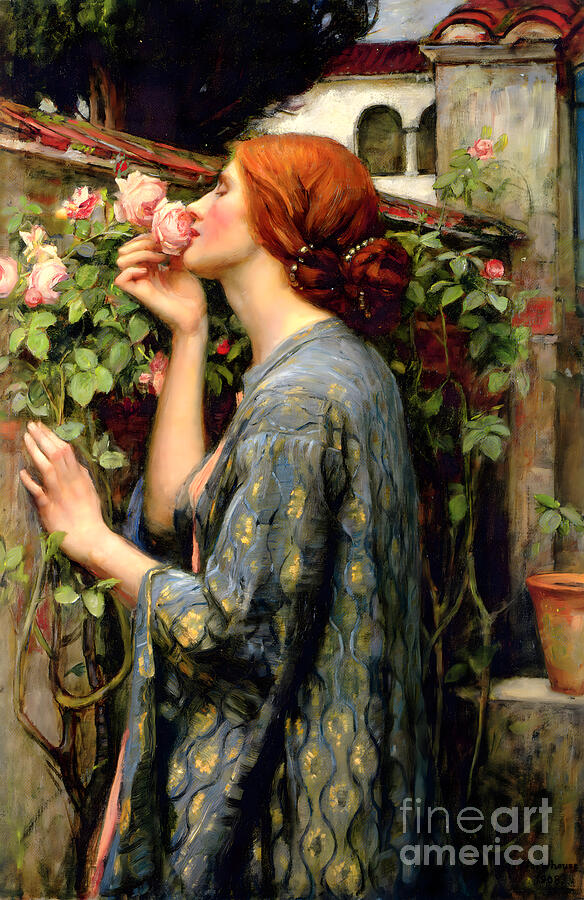
A red-haired woman leans into a garden wall and presses a rose to her face as if scent could be swallowed. Stone, blossoms, and soft light hold her in a private pause. In John William Waterhouse's The Soul of the Rose (1908), nothing "happens" except attention - and that is enough.
Artist: John William Waterhouse (1849-1917)
Date: 1908
Medium: Oil on canvas
Notable fact: Title drawn from Tennyson's Maud (1855): "And the soul of the rose went into my blood"
Tennyson in the Garden
Unlike Waterhouse pictures rooted in older romance cycles, this one takes its cue from Alfred Lord Tennyson's Maud (1855) and the line about the soul of the rose entering the blood. Literature becomes a sensory prompt: inhale, remember, desire.
Pre-Raphaelite Touch, Quiet Eroticism
The Brotherhood's love of feminine beauty tied to nature is here without loud myth. Delicate posture, rich petals, and careful textures in dress and stone invite you to invent the smell and the temperature of the air. Romance stays subtle; mystery stays intact.
Why the Gesture Holds
Waterhouse's late style still trusts detail and luminous color to carry feeling. The Soul of the Rose is less a plot than a mood you can step into. Look once for the flower. Look again for longing that needs no speech.
Own This Painting
Hang Waterhouse's Soul of the Rose - the red hair, the garden wall, and a breath full of petals.
Watch the video essay on @SapiensVerbum on YouTube.


Comments
Post a Comment