Lilith by John Collier: The Seductive Symbolism of the First Woman (1887)
She does not look at you. She looks at the snake. Pale skin against a brown-green thicket, golden hair, a serpent coiled from ankle to throat - John Collier's Lilith (1887) turns the first woman of Jewish legend into a Pre-Raphaelite problem: beauty that refuses Adam's order and prefers the animal's company.
Artist: John Collier (1850-1934)
Date: 1887
Medium: Oil on canvas
Collection: The Atkinson Art Gallery, Southport
Notable fact: Inspired in part by Dante Gabriel Rossetti's poem "Lilith, or Body's Beauty" (1868); moved from Bootle Art Gallery to the Atkinson in the 1970s
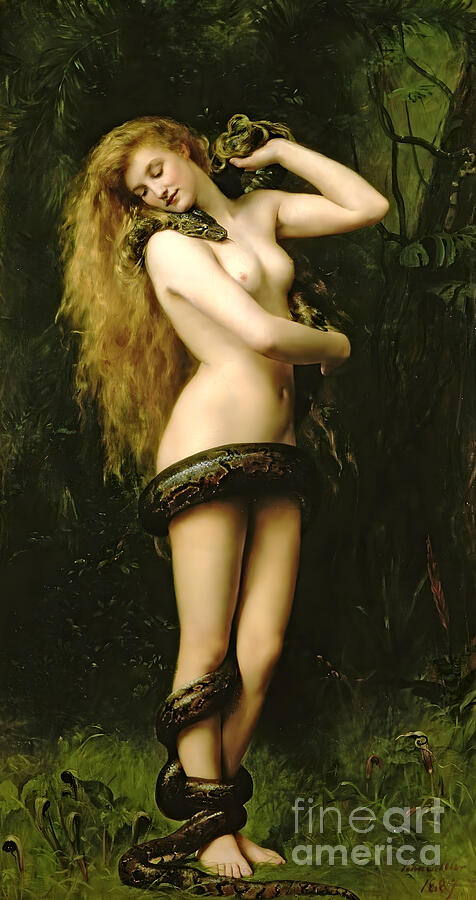
The Gaze Goes Sideways
Composition centres not on the viewer but on the snake's head resting at her shoulder. Lilith cradles the body; her cheek presses against scales. Intimacy replaces the usual Eden script of temptation aimed at man. Here the serpent is partner, jewellery, and co-conspirator - and she chooses that intimacy over your approval.
Rossetti's Shadow
Collier worked in a late Pre-Raphaelite climate still haunted by Rossetti's Lilith: witch before Eve, hair as "the world's first gold," beauty as weapon. Mythology supplies the refusal to submit; Victorian paint supplies the nude and the jungle. The result is less Bible illustration than symbolist portrait of untamed femininity.
Victorian Nerves
Contemporary critics split between praising the graceful nude and recoiling at the "coarse" green ground that cuts the figure. That discomfort is part of the picture's job. Lilith was never meant to reassure a moralising public. She is the woman who left the garden because equality was not on offer.
Why She Still Stares Past Us
Modern readers reclaim Lilith as autonomy and shadow. Collier's canvas already knew the charge: a body at ease with danger, a myth that outlived the marriage plot. You can call it seduction. You can call it freedom. The snake stays where she put it.
Own This Painting
Hang Collier's Lilith - the first woman, the serpent, and the gaze that will not perform for you.
Watch the video essay on @SapiensVerbum on YouTube.


Comments
Post a Comment